From traditional calico cats to gold, black, red, blue, and pink designs, modern maneki-neko come in a surprising variety of colors. Learning what each color represents makes choosing a cat that matches your personal wish even more enjoyable. White and Calico: Good Fortune and All-Around Luck White is one of the most traditional colors for maneki-neko. It evokes purity, sincerity, and new beginnings. Calico maneki-neko are also widely recognized as…
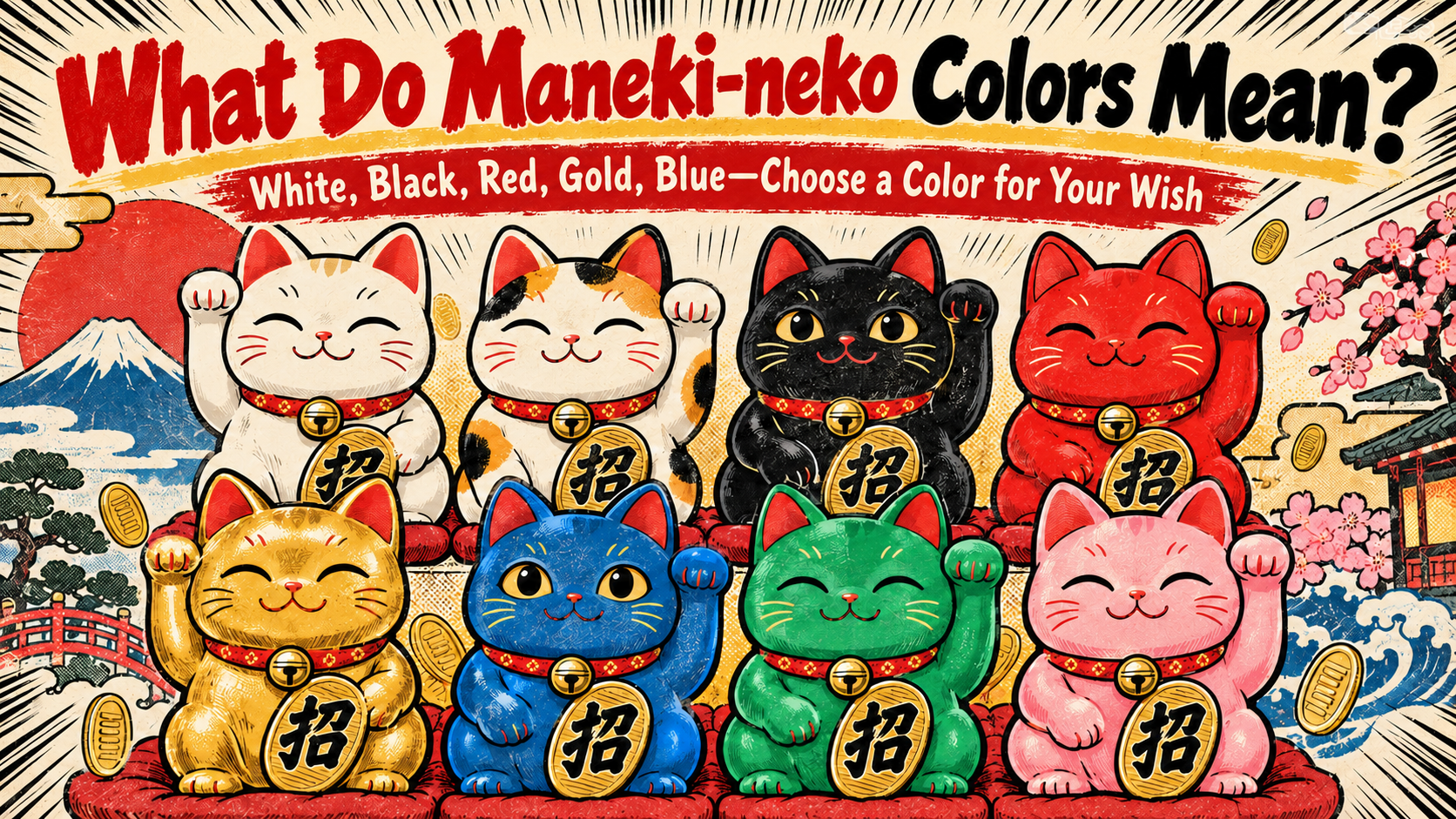
From traditional calico cats to gold, black, red, blue, and pink designs, modern maneki-neko come in a surprising variety of colors. Learning what each color represents makes choosing a cat that matches your personal wish even more enjoyable.
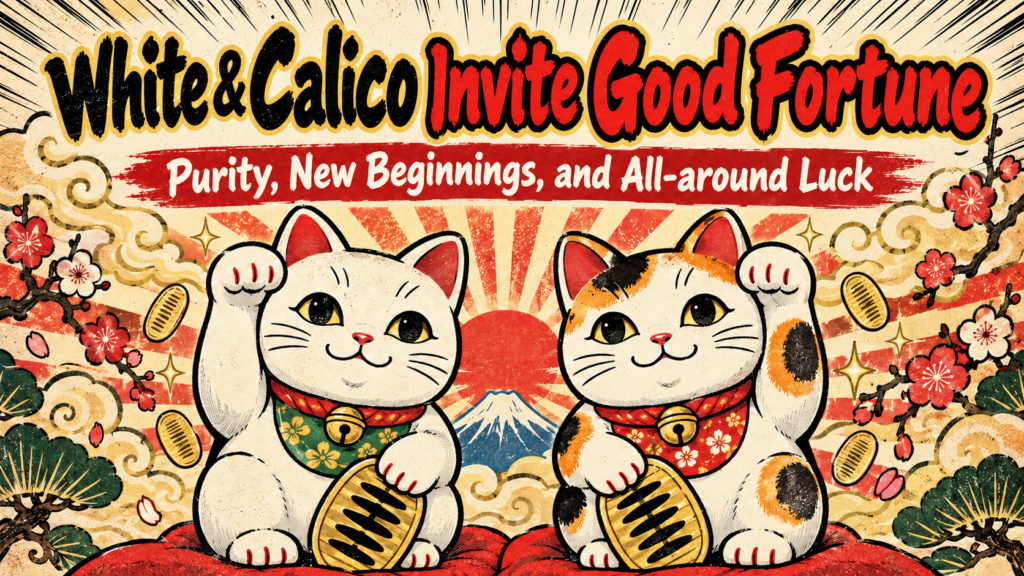
White is one of the most traditional colors for maneki-neko. It evokes purity, sincerity, and new beginnings. Calico maneki-neko are also widely recognized as a classic design and are associated with general good fortune and prosperity in business.
In Japan, male calico cats are extremely rare. For this reason, they are sometimes regarded as symbols of exceptional luck and precious opportunities.
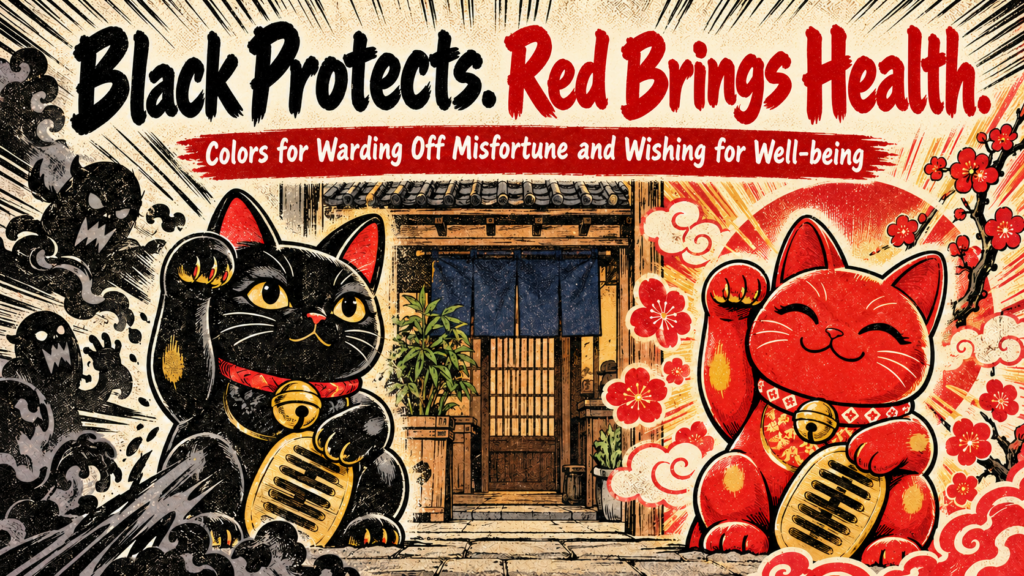
Although black cats are considered unlucky in some cultures, black maneki-neko in Japan have traditionally been associated with protection from evil, misfortune, and other unseen dangers.
Cats can see well in the dark, which may have contributed to the idea that a black cat can detect and ward off hidden threats. Black maneki-neko are sometimes placed near the entrance of a home or shop as protective guardians.
Red has long been regarded as a protective color in Japan. Historically, it was also used in prayers and objects intended to guard people against diseases such as smallpox.
A red maneki-neko is therefore associated with good health, freedom from illness, and protection against disease.
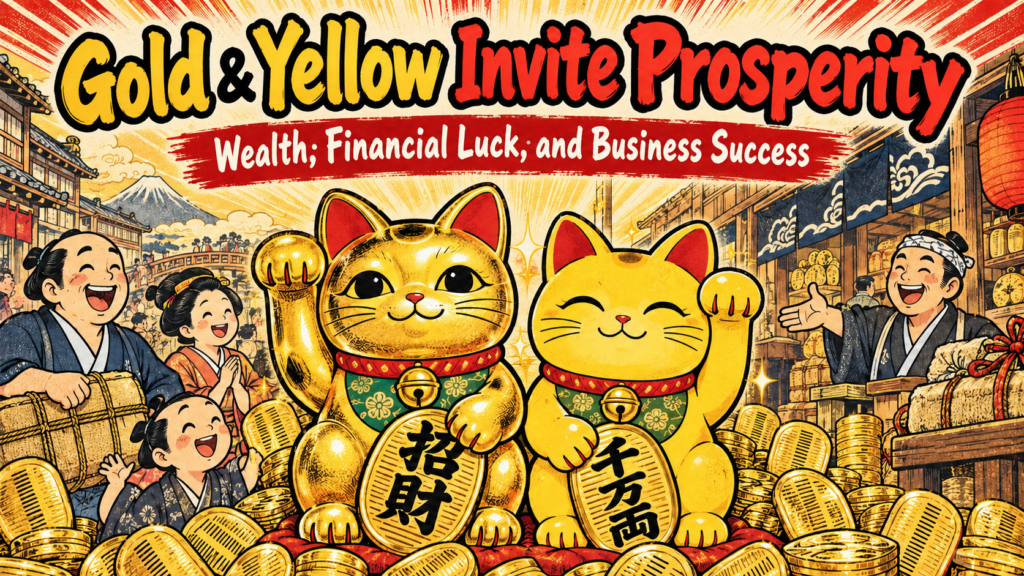
Gold is an unmistakable symbol of wealth and prosperity. Gold maneki-neko are especially popular in shops, offices, and businesses, where they are displayed in the hope of attracting money, financial success, and thriving trade.
Yellow is sometimes given a similar meaning because of its visual connection to gold.

Blue is often associated with calmness, intelligence, and clear judgment. Blue maneki-neko may be chosen by people wishing for academic achievement, success at work, or professional development.
Depending on the region or maker, blue may also represent road and travel safety.
Green evokes nature, peace, renewal, and growth. Green maneki-neko are commonly connected with wishes for good health, household safety, and the growth of personal abilities or talents.
They may also be chosen as symbols of a peaceful and secure home.
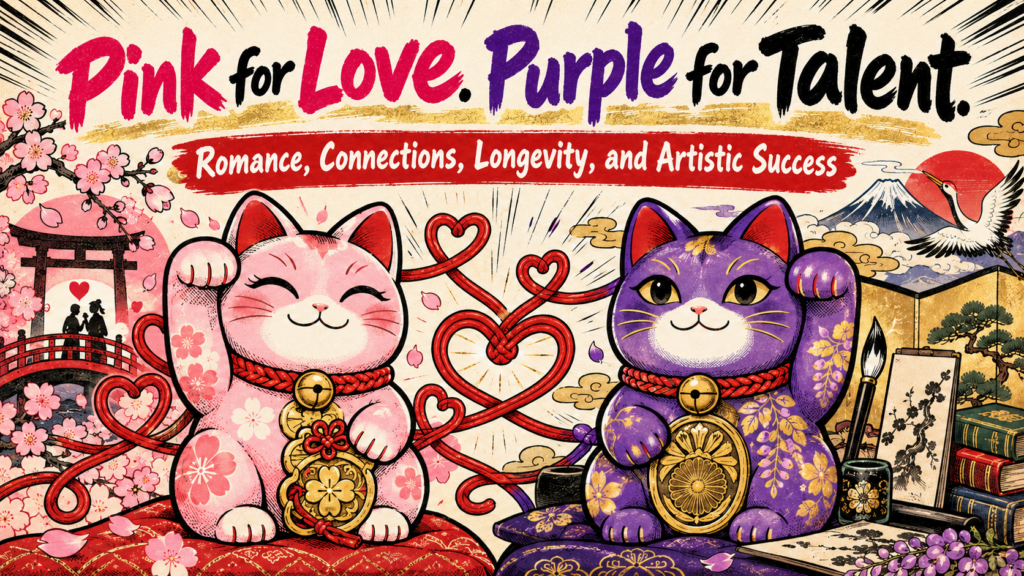
Pink maneki-neko are a modern variation associated with romance, finding a partner, and forming meaningful relationships.
Pink was not a common color among the earliest traditional maneki-neko. Its popularity is a good example of how the range of wishes represented by these lucky cats has expanded over time.
Purple has long been associated with nobility, elegance, and high status in Japan. Purple maneki-neko may represent longevity, dignity, creative achievement, and the flowering of artistic talent.
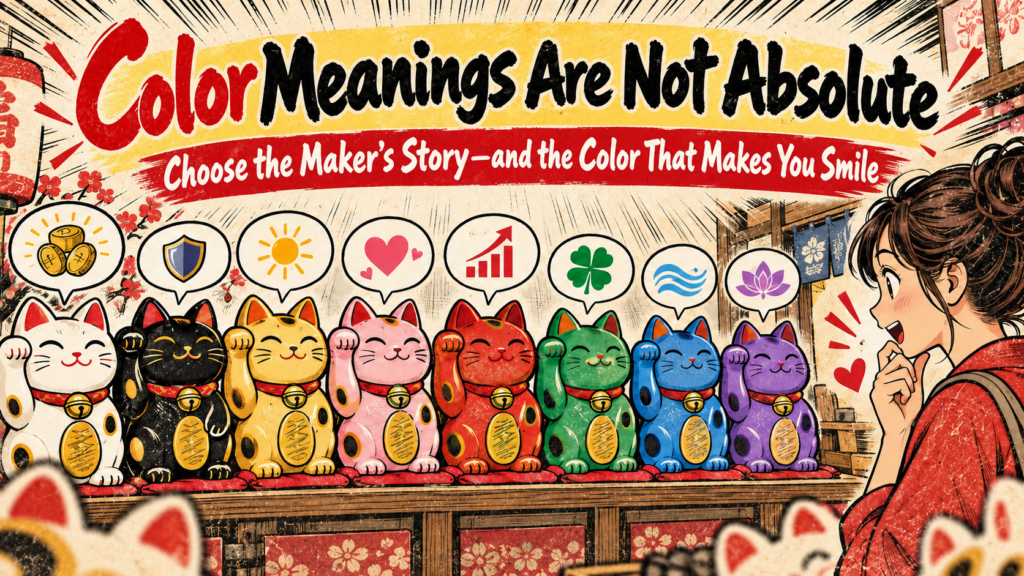
There is no single nationwide standard defining the meaning of every maneki-neko color. One maker may describe blue as a color for academic success, while another region or manufacturer may associate it with road safety.
This is because contemporary product concepts, local traditions, feng shui, and older Japanese beliefs have gradually blended together.
When purchasing a maneki-neko, consider not only the commonly accepted meaning of its color but also the explanation provided by its maker. Above all, choose a color that lifts your spirits whenever you see it.
A maneki-neko is more than a lucky ornament. It is a companion that connects your wishes with everyday life.
 Basics
 Basics