Articles
ALL ARTICLES — 11
2026.09.12
 history
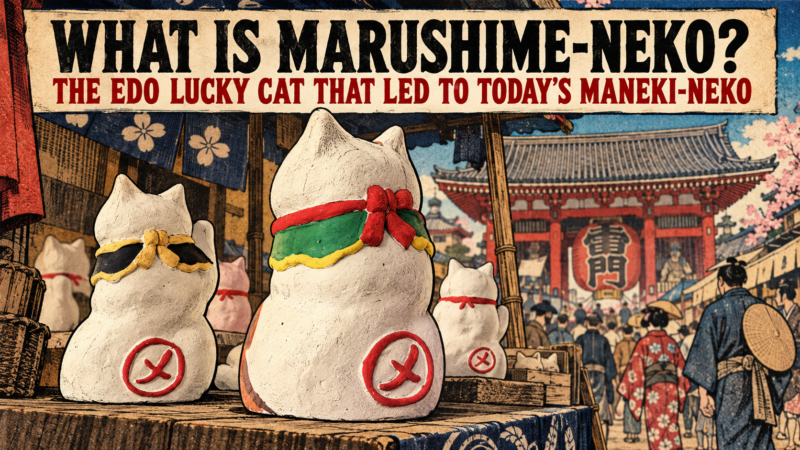
12. What Is Marushime-neko? The Edo-Era Lucky Cat That Led to Today’s Maneki-neko
The Marushime-neko is an essential part of the history of the maneki-neko. Associated with Imado ware, these Edo-period clay cat figurines have attracted attention as an early form connected to the development of the modern maneki-neko. The Wishes Represented by “Maru” and “Shime” The name Marushime-neko comes from a symbol combining a circle—maru in Japanese—with the character 〆, pronounced shime,…
Read more ›
2026.09.12
 English
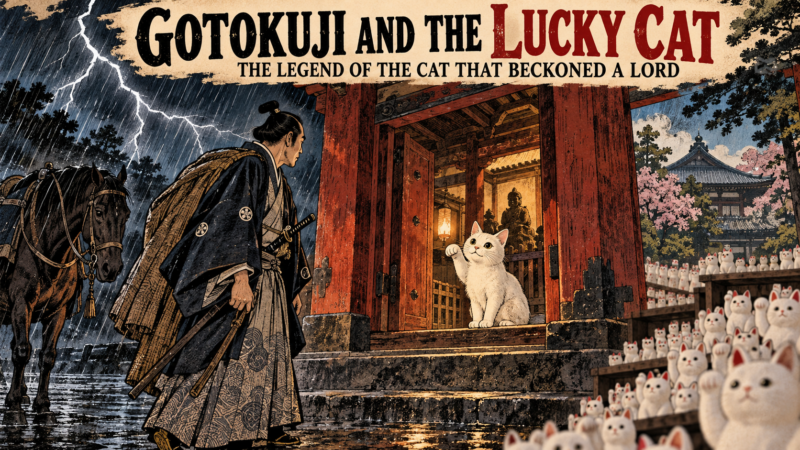
11. Gotokuji Temple and the Maneki-neko|The Legend of the Cat That Beckoned a Feudal Lord
Gotokuji Temple in Setagaya, Tokyo, is known around the world for the remarkable sight of countless white maneki-neko figurines gathered together. The temple attracts visitors from Japan and abroad, but its cats look slightly different from the familiar maneki-neko commonly shown holding a large gold coin. The Cat That Beckoned Ii Naotaka into the Temple According to the legend passed…
Read more ›
2026.09.11
 history
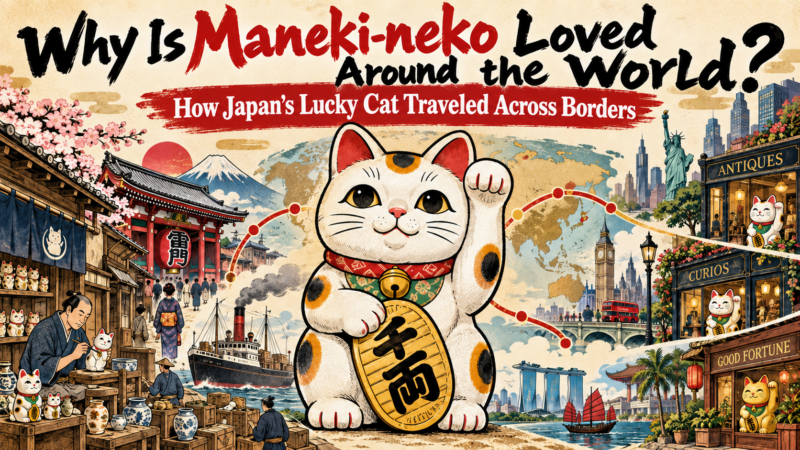
9. Why Is the Maneki-neko Loved Around the World? How the “Lucky Cat” Traveled Beyond Japan
Born at the entrances of Japanese shops, the maneki-neko can now be found in restaurants, stores, hotels, and homes around the world. In English, it is commonly known as the “Maneki-neko,” “Lucky Cat,” or “Fortune Cat.” How did this uniquely Japanese good-luck charm cross national borders and become loved worldwide? Traveling Overseas with Japanese Ceramics During the Meiji period (1868–1912),…
Read more ›
2026.09.11
 Kilns & Craft
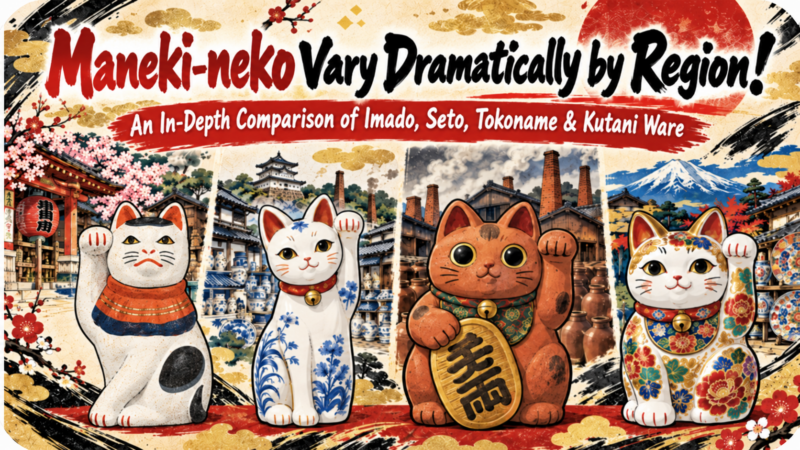
8. Understanding the Regional Origins of Maneki-neko: The Differences Between Seto, Tokoname, Kutani, and Imado Ware
Although they are all maneki-neko, their appearances can be remarkably different. Some are slender and elegant, some have round faces and large eyes, some are decorated with vivid colors, while others retain the rustic warmth of clay. These differences developed from the materials, techniques, and histories of the regions in which they were made. Imado Ware: Rustic Cats Born from…
Read more ›
2026.09.05
 Kilns & Craft
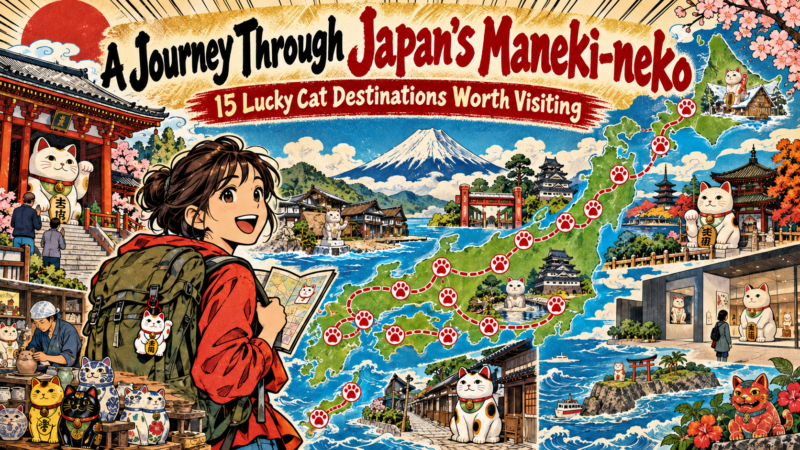
7. A Journey Through Japan’s Maneki-neko Culture: 15 Lucky Cat Destinations Worth Visiting
If you want to gain a deeper understanding of the maneki-neko, one of the best ways is to visit the temples, shrines, pottery towns, and museums connected with its history. From places associated with origin legends to towns renowned for ceramic production, here are 15 of Japan’s most notable maneki-neko destinations. Opening hours, closed days, exhibitions, and festival schedules are…
Read more ›
2026.09.05
 Basics
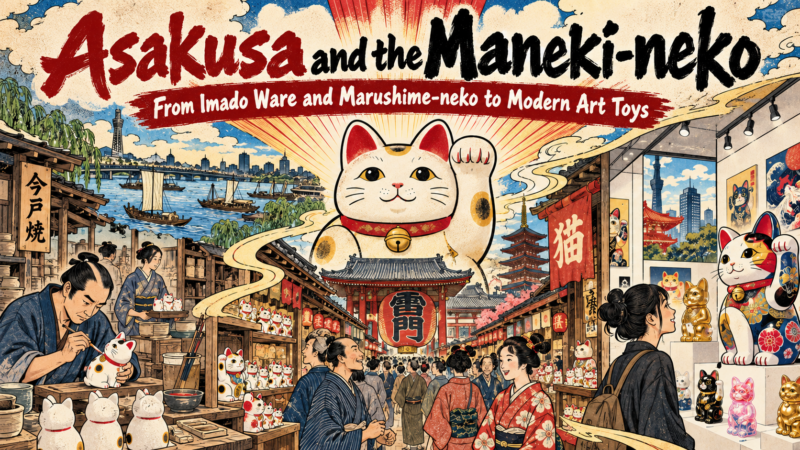
6. Asakusa and the Maneki-neko: From Imado Ware and Marushime-neko to the Present Day
Asakusa, Tokyo, has long been a gathering place for temples, shrines, theaters, street entertainment, souvenir shops, and traditional craftspeople. It is also an essential place in the history of the maneki-neko. Imado Ware Grew Beside the Sumida River Imado ware is a type of pottery traditionally produced around present-day Imado in Tokyo’s Taito City. With clay available near the Sumida…
Read more ›
2026.09.05
 Basics
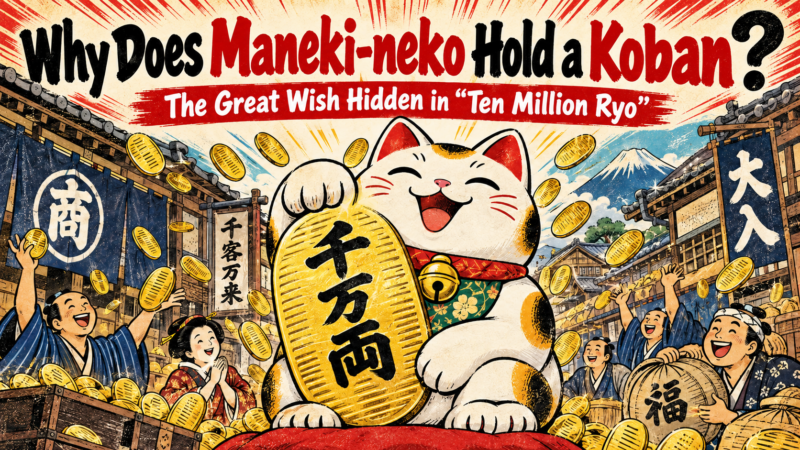
5. Why Does Maneki-neko Hold a Koban? The Meaning Behind “Ten Million Ryō”
Look closely at a maneki-neko and you may see it holding a large, oval-shaped gold coin against its chest. The coin may be inscribed with words such as “One Thousand Ryō,” “Ten Million Ryō,” “Good Fortune,” or “Good Luck.” But why did these beckoning cats come to hold koban coins? Koban: A Symbol of Wealth in the Edo Period A…
Read more ›
2026.09.05
 Basics
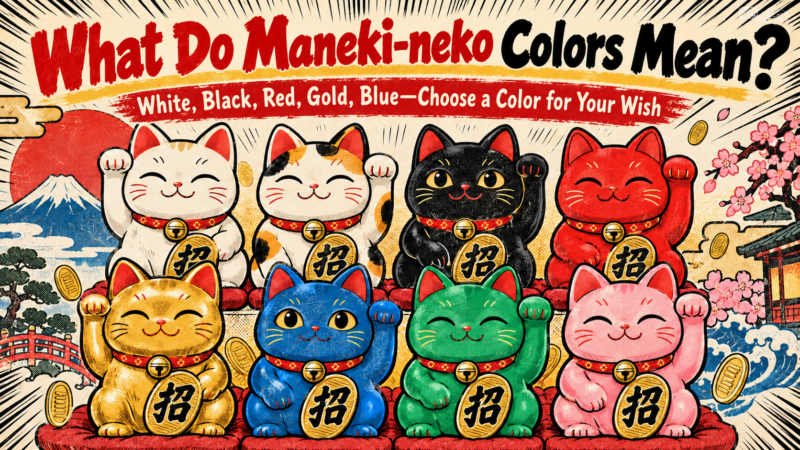
4. What Do the Colors of Maneki-neko Mean? White, Black, Red, Gold, Blue, and More
From traditional calico cats to gold, black, red, blue, and pink designs, modern maneki-neko come in a surprising variety of colors. Learning what each color represents makes choosing a cat that matches your personal wish even more enjoyable. White and Calico: Good Fortune and All-Around Luck White is one of the most traditional colors for maneki-neko. It evokes purity, sincerity,…
Read more ›
2026.09.05
 Basics
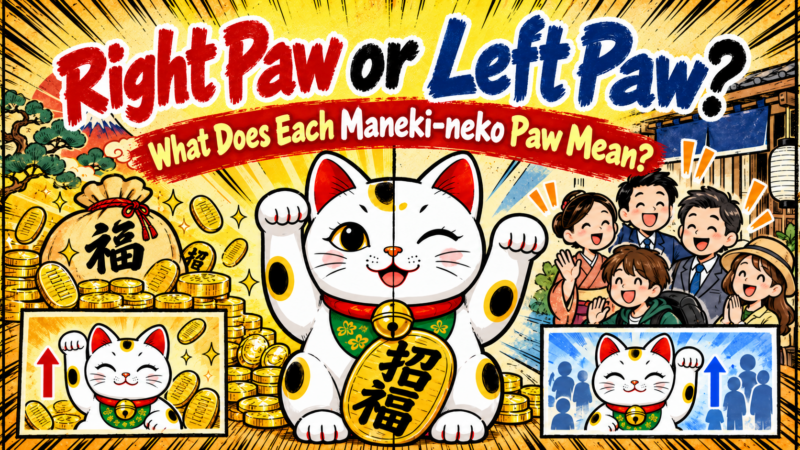
3. Right Paw or Left Paw? What Each Maneki-neko’s Raised Paw Means
When choosing a maneki-neko, one of the first things you will notice is which paw it is raising: the right paw, the left paw, or sometimes both. So, what kind of wish does each pose represent? The Right Paw Invites Wealth and Good Fortune A maneki-neko raising its right paw is generally believed to invite money, financial prosperity, and good…
Read more ›
2026.09.05
 Basics
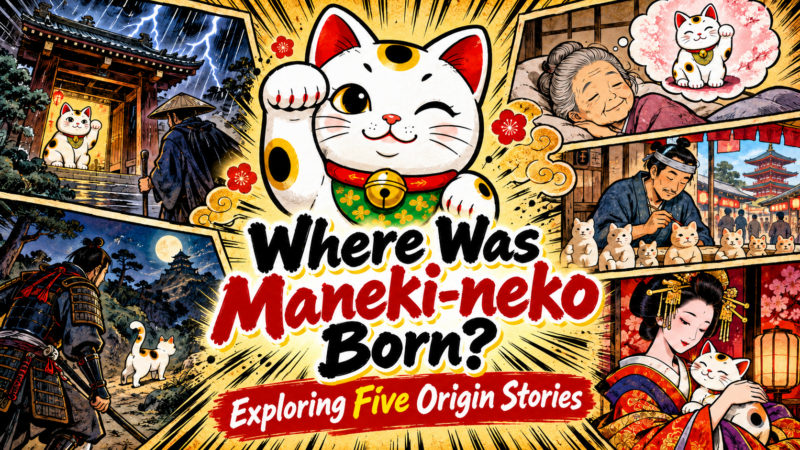
2. Where Was the Maneki-neko Born? Exploring Five Origin Stories of Japan’s Lucky Cat
“Where was the maneki-neko born?” Even today, there is no single definitive answer to this question. Several different origin stories have been passed down, each shaped by temple legends, local memories, and Japan’s pottery traditions. The key is to distinguish between famous legends and the earliest examples supported by historical records. Here, we explore five of the best-known theories about…
Read more ›
2026.09.05
 Basics
What Is Maneki-neko? A Complete Guide to the Meaning, History, and Origins of Japan’s Famous Lucky Cat
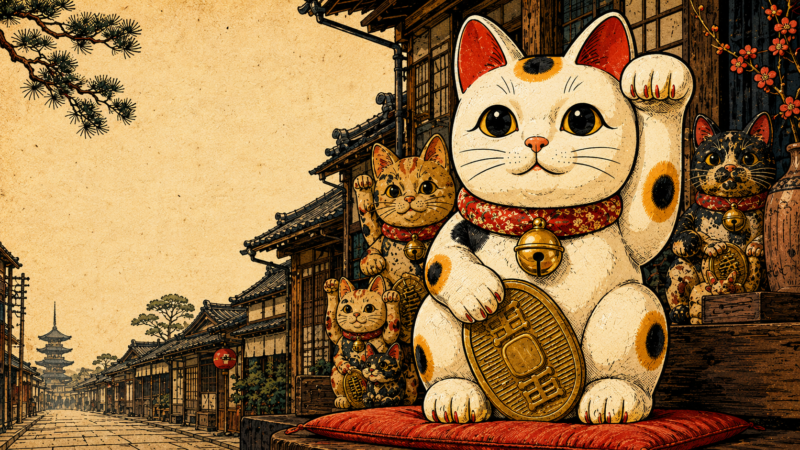
You may have seen one sitting at the entrance to a shop or home: a cat with one paw raised as if beckoning someone closer. Known as maneki-neko, this figure is one of Japan’s most recognizable good-luck charms. It is believed to invite good fortune, customers, business success, wealth, and positive relationships. Outside Japan, maneki-neko are also commonly known as…
Read more ›