Asakusa, Tokyo, has long been a gathering place for temples, shrines, theaters, street entertainment, souvenir shops, and traditional craftspeople. It is also an essential place in the history of the maneki-neko. Imado Ware Grew Beside the Sumida River Imado ware is a type of pottery traditionally produced around present-day Imado in Tokyo’s Taito City. With clay available near the Sumida River and convenient access to river transportation, local craftspeople produced…
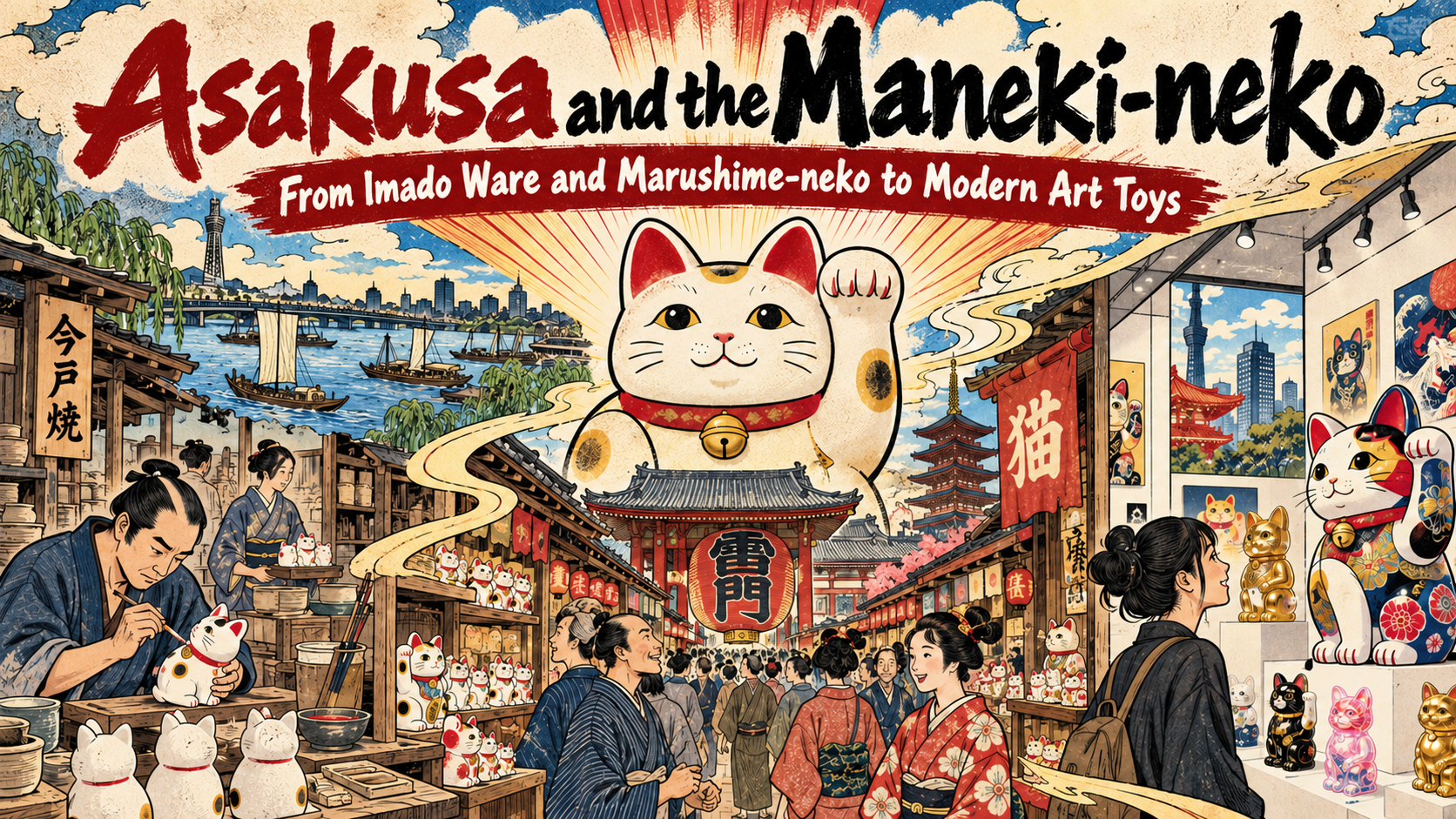
Asakusa, Tokyo, has long been a gathering place for temples, shrines, theaters, street entertainment, souvenir shops, and traditional craftspeople. It is also an essential place in the history of the maneki-neko.
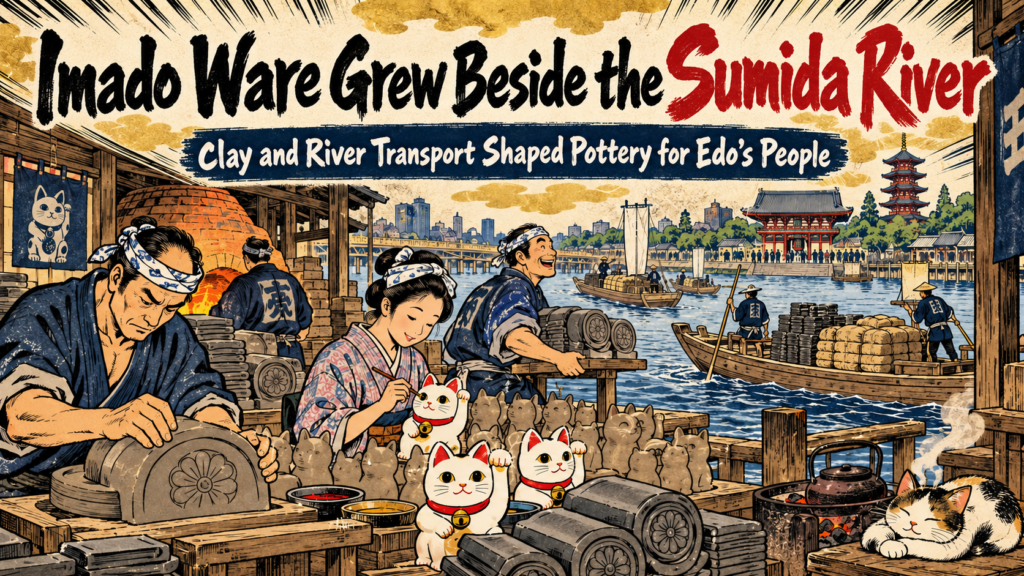
Imado ware is a type of pottery traditionally produced around present-day Imado in Tokyo’s Taito City.
With clay available near the Sumida River and convenient access to river transportation, local craftspeople produced roof tiles, household items, hibachi braziers, clay figurines, and many other everyday objects.
One of the defining characteristics of Imado ware is that it was not limited to expensive works of art. It also included affordable pottery that ordinary people in Edo could use and enjoy in their daily lives. Clay cat figurines emerged from this vibrant popular culture.
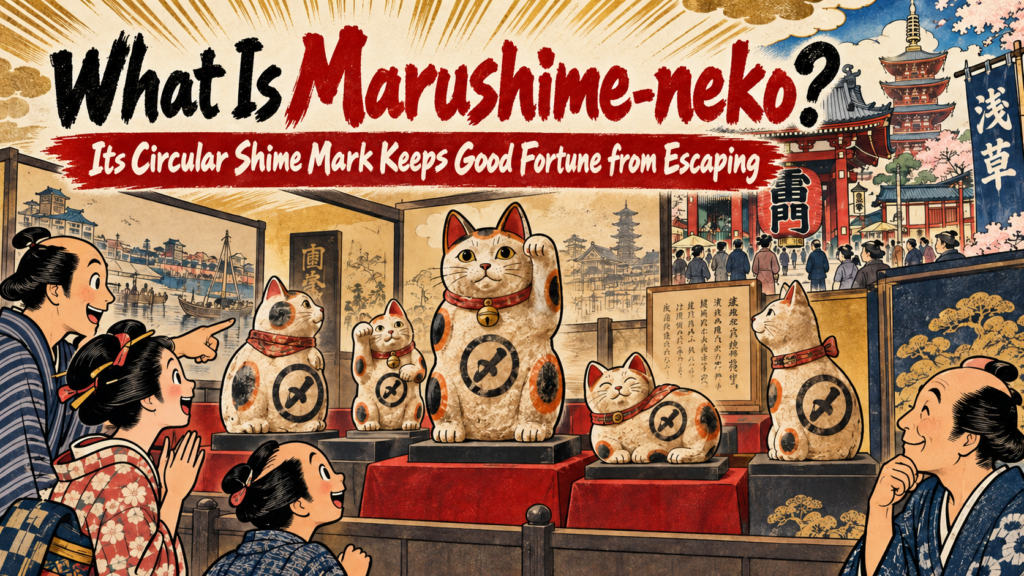
One of the best-known lucky cat figures associated with Imado ware is the Marushime-neko.
These figures bear a mark combining a circle, or maru, with the Japanese character 〆, pronounced shime. The name suggests the wish to “close in” good fortune and money so that they cannot escape.
Surviving Marushime-neko appear in several different forms. Some raise a paw like today’s familiar maneki-neko, while others face sideways or take different poses.
These variations suggest that the modern maneki-neko did not suddenly emerge from a single fixed design. Instead, its familiar appearance developed gradually through many different kinds of clay cat figurines.
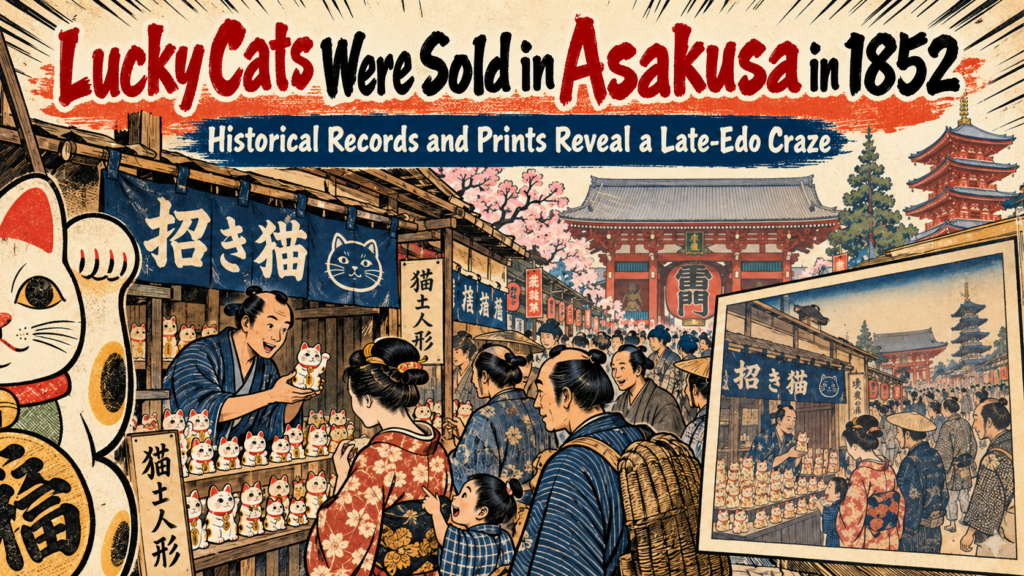
An entry from 1852—the fifth year of the Kaei era—in the Edo chronology Buko Nenpyo describes clay cat figurines being sold around Sensoji Temple and becoming popular.
In the same year, Utagawa Hiroshige created the woodblock print Jorurimachi Hanka no Zu. The work depicts a shop near Sensoji selling cat ornaments believed to be Marushime-neko.
This print is an important visual record showing that lucky cat figurines were actually being produced, sold, and circulated as commercial goods in late-Edo-period Asakusa.
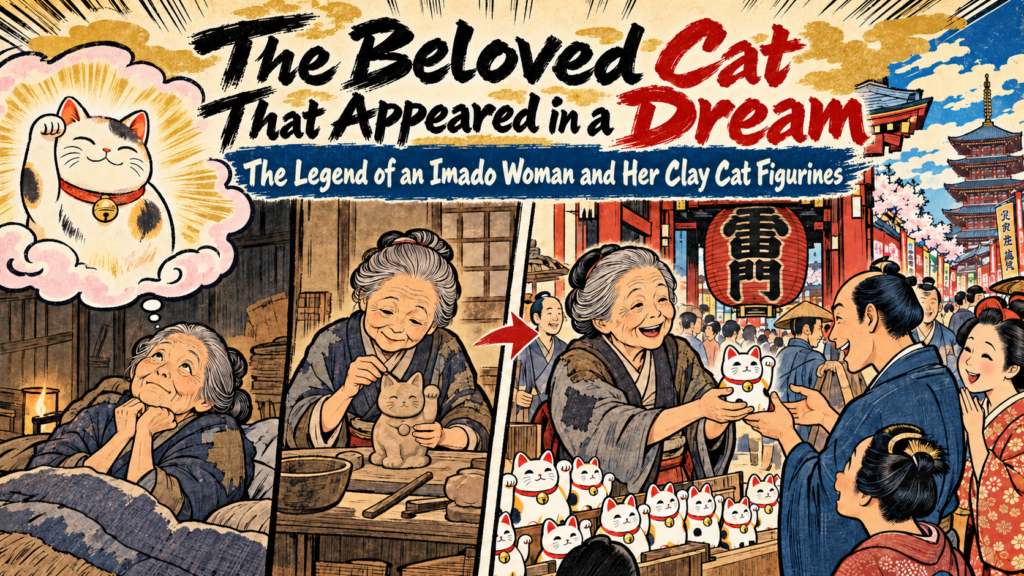
Imado is also home to a legend about an elderly woman who was forced by poverty to give up her beloved cat.
According to the story, the cat later appeared to her in a dream and told her to make a clay figurine in its image. She followed its instructions and sold the figurines in Asakusa, where they became extremely popular and helped restore her livelihood.
The details of this story cannot be fully verified through historical records. However, its setting is believable: Imado had the pottery-making skills, while the area around Sensoji attracted large numbers of pilgrims and provided a busy marketplace in which cat figurines could spread.
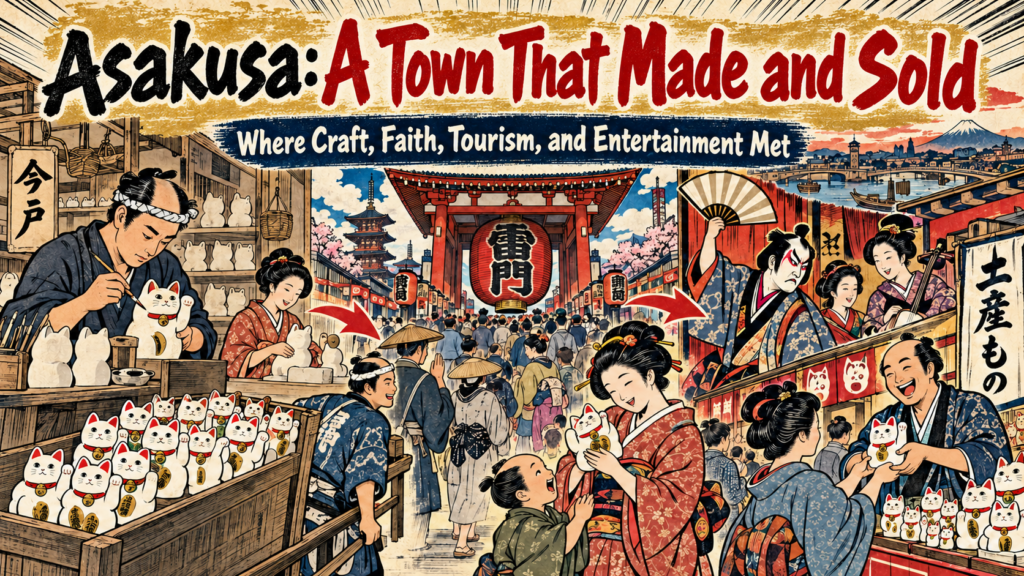
Imado was home to craftspeople, while Sensoji attracted visitors from across Japan. Nearby Yoshiwara and the surrounding theater districts were also places where entertainment and new fashions were created.
Craftsmanship, faith, tourism, entertainment, and commerce all existed close together. This concentration may have helped new lucky charms spread quickly.
The maneki-neko was both an object connected with spiritual belief and a form of Edo-period popular culture—something that visitors could buy and take home with them.
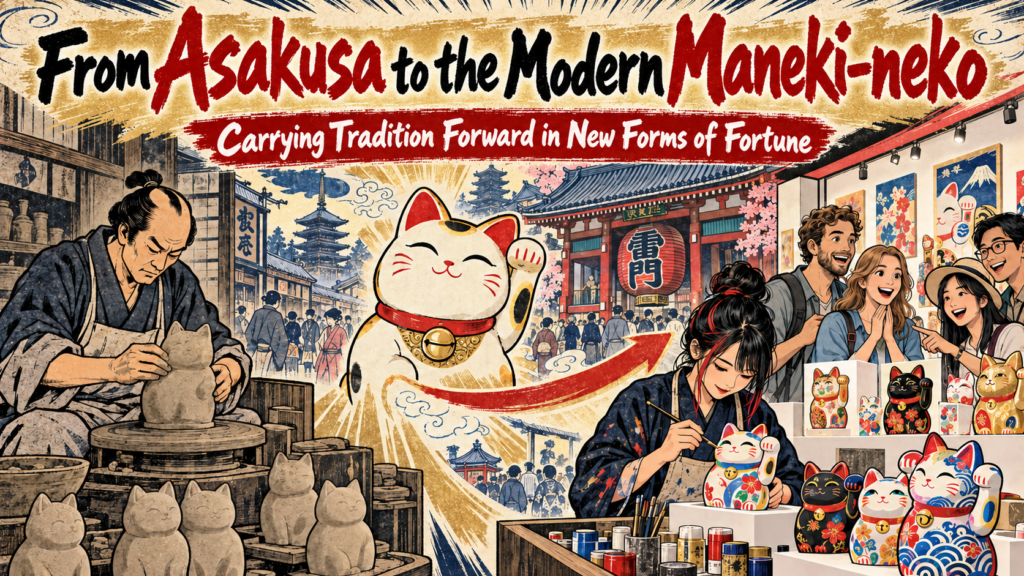
Today, travelers visit Asakusa not only in search of traditional crafts and souvenirs but also to discover new expressions of Japanese culture, including illustration, fashion, contemporary art, character design, and art toys.
Just as Edo-period craftspeople created cats that appealed to the people of their time, contemporary artists are creating new maneki-neko using modern materials and forms of expression.
Creating a modern maneki-neko in Asakusa does not mean destroying tradition. It means continuing Asakusa’s culture of craftsmanship—a culture that has delivered good fortune by allowing the maneki-neko to change its appearance with each new era.
 Basics
 Basics