Gotokuji Temple in Setagaya, Tokyo, is known around the world for the remarkable sight of countless white maneki-neko figurines gathered together. The temple attracts visitors from Japan and abroad, but its cats look slightly different from the familiar maneki-neko commonly shown holding a large gold coin. The Cat That Beckoned Ii Naotaka into the Temple According to the legend passed down at Gotokuji, Ii Naotaka, the feudal lord of the…
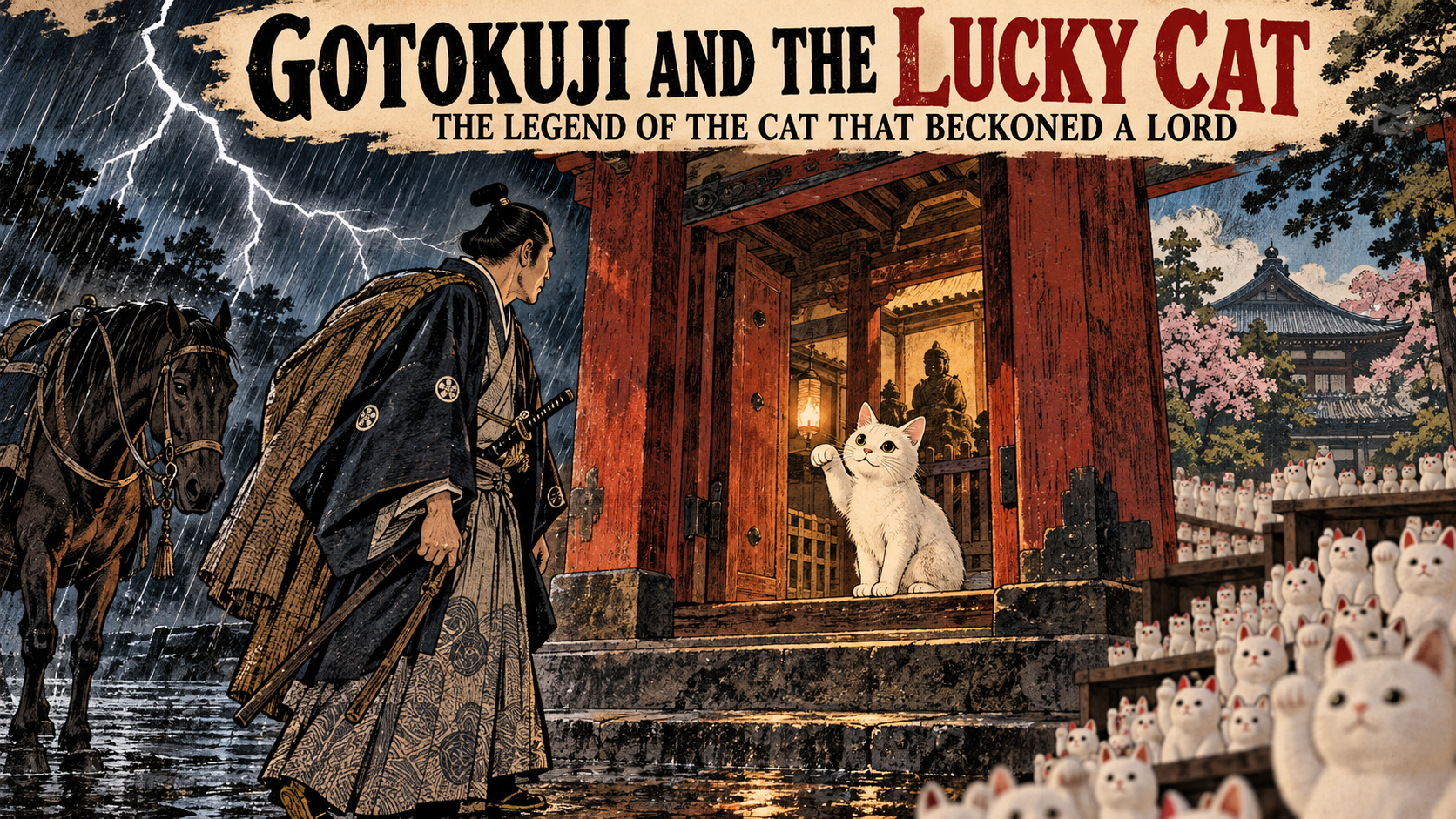
Gotokuji Temple in Setagaya, Tokyo, is known around the world for the remarkable sight of countless white maneki-neko figurines gathered together.
The temple attracts visitors from Japan and abroad, but its cats look slightly different from the familiar maneki-neko commonly shown holding a large gold coin.
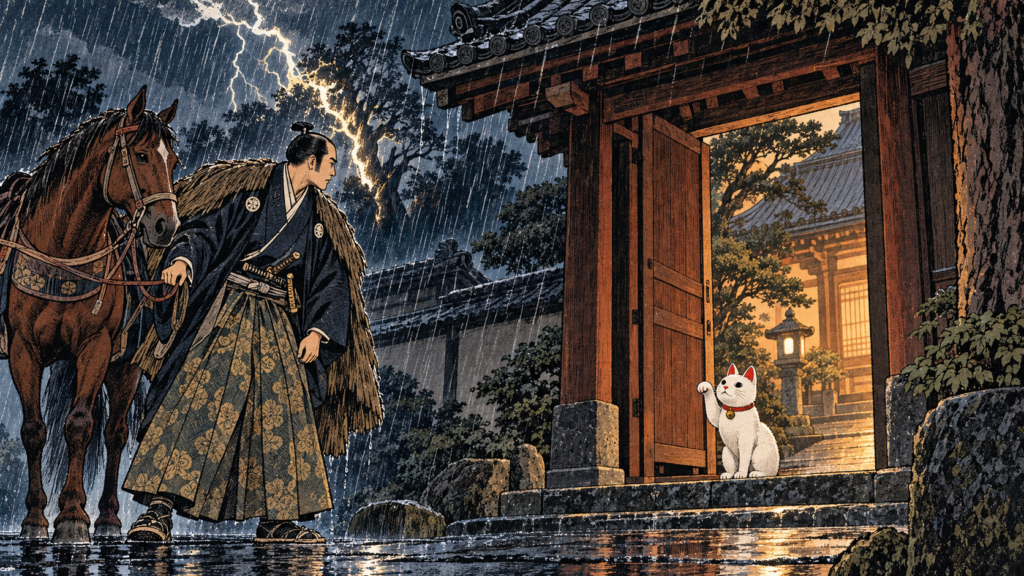
According to the legend passed down at Gotokuji, Ii Naotaka, the feudal lord of the Hikone Domain, was passing by the temple while returning from a falconry trip during the Edo period.
A cat sitting near the temple gate appeared to beckon to him with its paw, prompting Naotaka to enter the temple.
Soon afterward, a violent thunderstorm began. Having escaped the danger by following the cat, Naotaka was deeply grateful for the fortunate encounter. The temple later prospered as the family temple of the Ii clan.
In this story, the cat did not directly bring money. Instead, it brought a meaningful encounter, an opportunity to avoid danger, and a connection that shaped the temple’s future.
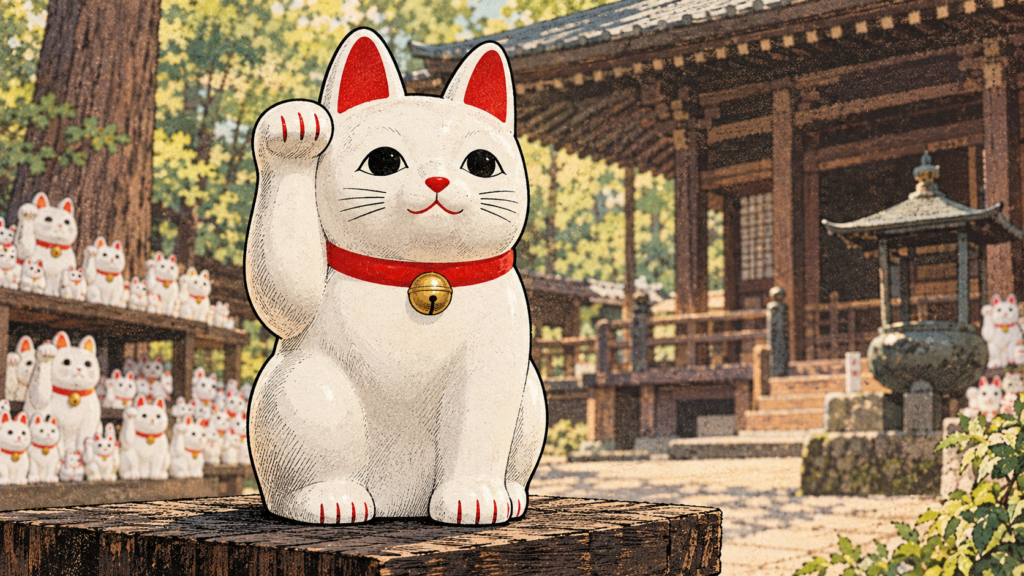
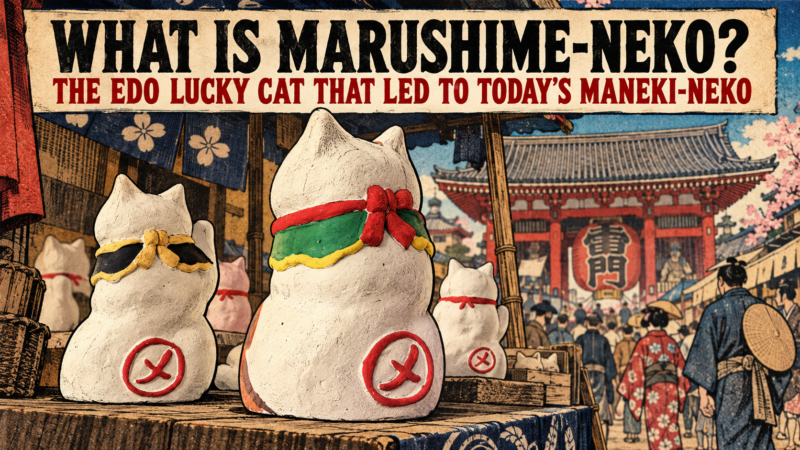
At Gotokuji, the beckoning cat is known as the Shofuku Manekineko, meaning “the beckoning cat that invites good fortune.”
It has a simple white body, raises its right front paw, and does not hold a gold coin.
Its appearance suggests the idea that although the cat may bring an opportunity, people must take action themselves to turn that opportunity into good fortune.
Rather than handing someone a completed form of luck, the cat opens the door to a fortunate connection.
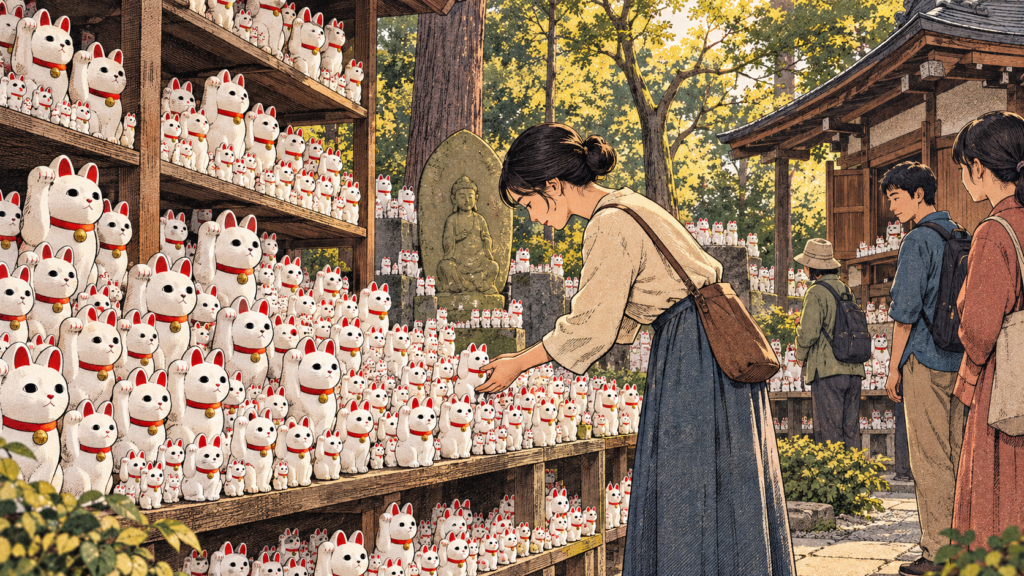
Visitors receive a Shofuku Manekineko and later return it to the temple with gratitude after their wish has been fulfilled.
The many cats of different sizes displayed within the temple grounds each represent someone’s wish and expression of thanks.
The scene has become famous for its visual beauty, but it is not simply an installation created for photographs. Visitors should remember that Gotokuji is a place of worship. The cats should not be written on, moved, or treated as photography props.
Approaching them quietly and respectfully is an important part of visiting the temple.
Hikone City in Shiga Prefecture, which has deep historical ties to the Ii clan, is also known for its popular cat-inspired mascot, Hikonyan.
Visiting Hikone after learning about Gotokuji’s maneki-neko legend reveals a fascinating connection between cats and the Ii family that extends from the Edo period to the present day.
The story of Gotokuji teaches us that the maneki-neko is more than a symbol of financial fortune.
It can invite people into our lives, protect us from danger, and create new relationships. Gotokuji’s white cat is a symbol of this richer idea of en—the meaningful connections and encounters that shape our lives.
Related articles: “Where Was the Maneki-neko Born?” and “A Journey Through Japan’s Most Fascinating Maneki-neko Destinations”
 history
 history