Born at the entrances of Japanese shops, the maneki-neko can now be found in restaurants, stores, hotels, and homes around the world. In English, it is commonly known as the “Maneki-neko,” “Lucky Cat,” or “Fortune Cat.” How did this uniquely Japanese good-luck charm cross national borders and become loved worldwide? Traveling Overseas with Japanese Ceramics During the Meiji period (1868–1912), Japanese ceramics, arts, and crafts were exported overseas in large…
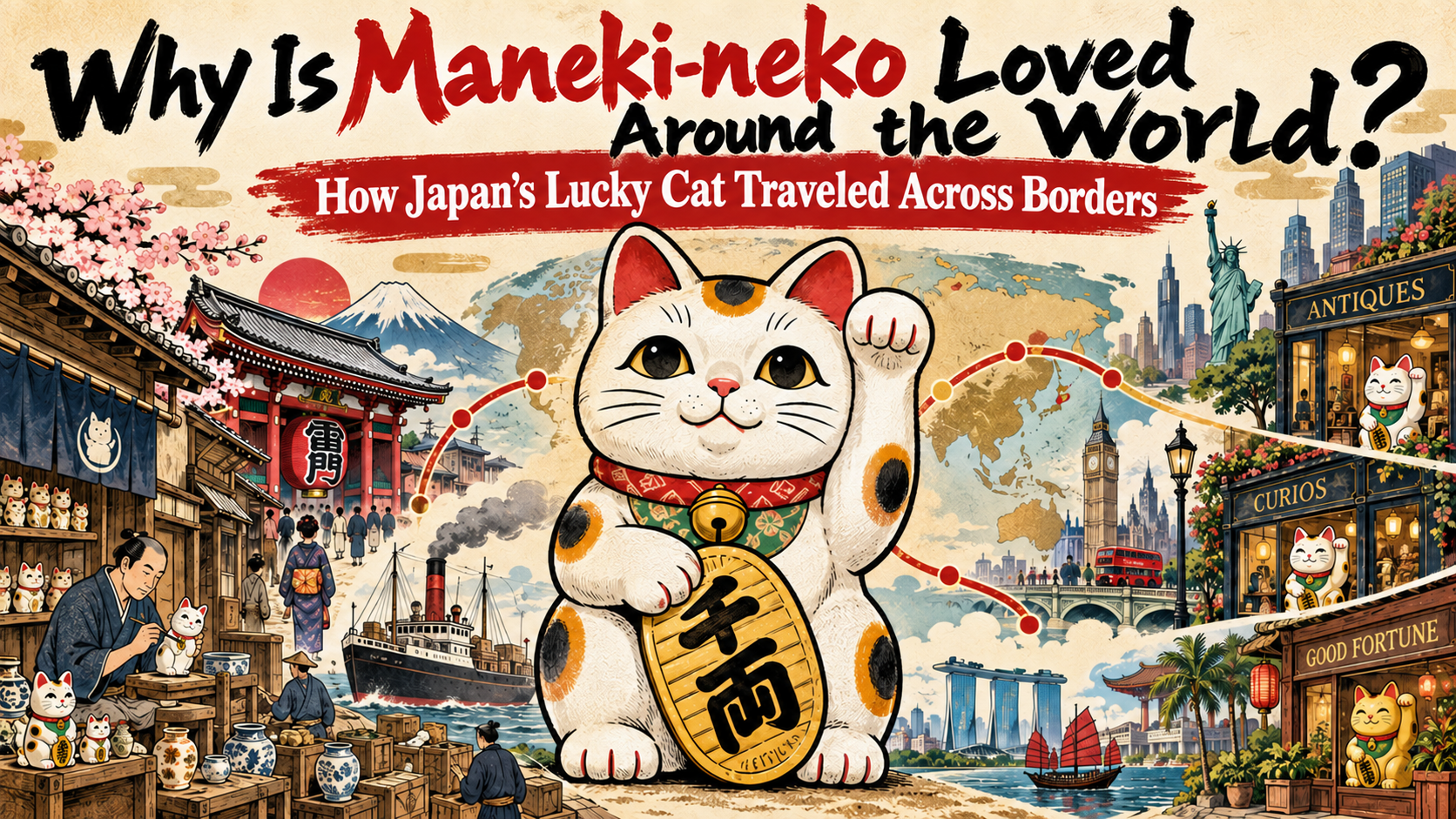
Born at the entrances of Japanese shops, the maneki-neko can now be found in restaurants, stores, hotels, and homes around the world. In English, it is commonly known as the “Maneki-neko,” “Lucky Cat,” or “Fortune Cat.”
How did this uniquely Japanese good-luck charm cross national borders and become loved worldwide?
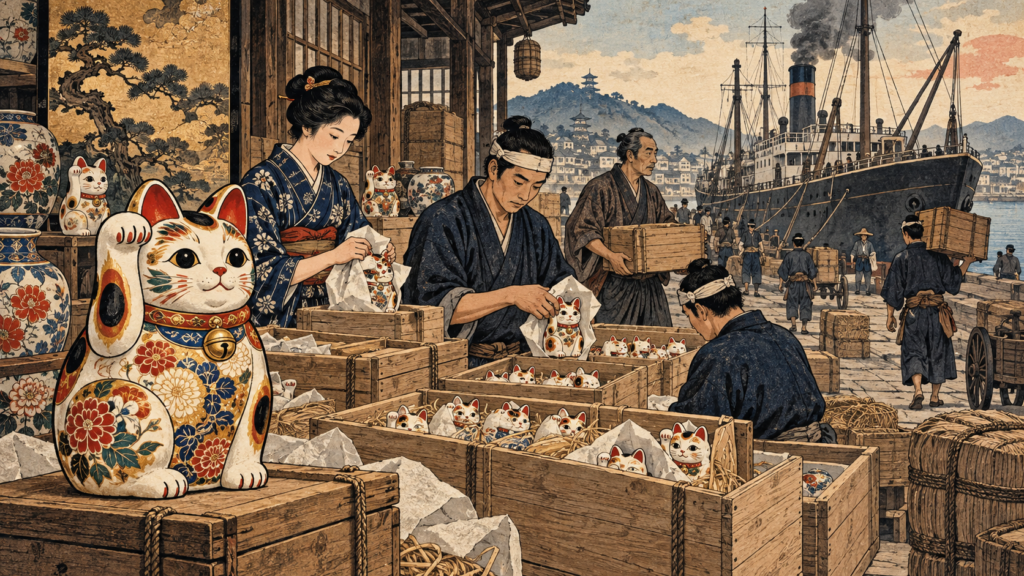
During the Meiji period (1868–1912), Japanese ceramics, arts, and crafts were exported overseas in large quantities. As interest in Japanese art and culture grew in Europe and North America, vividly decorated ceramic cat figurines—including those made in the Kutani style—were embraced as ornaments and collectibles.
Later, maneki-neko became established as symbols of business prosperity through Japanese- and Asian-owned shops and restaurants around the world.
Today, they are frequently seen in Chinatowns, which sometimes leads people to assume that they originated in China. However, the maneki-neko has its roots in Japan.
Even without an explanation, a maneki-neko appears to be calling out, “Come this way.”
Its round face, large eyes, raised paw, and golden coin intuitively express welcome, friendliness, and prosperity.
Another reason it spread so easily overseas may be that it is not bound by strict religious rules and can be placed in either a business or a home. Each owner is free to give the cat a personal meaning and entrust it with their own wishes.
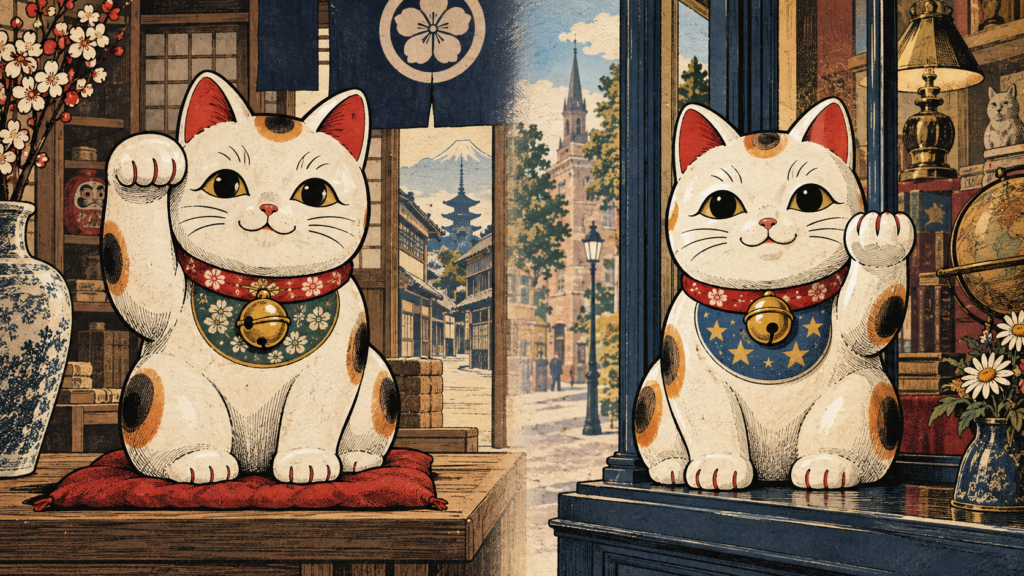
In Japan, curling the fingers with the palm facing downward is a gesture meaning “Please come this way.” In Europe and North America, however, the same movement can sometimes look like a farewell wave.
For overseas markets, manufacturers therefore created maneki-neko with their palms facing upward.
Rather than simply exporting the traditional design unchanged, adapting it to the gestures and customs of other cultures helped the Lucky Cat become established around the world.
Maneki-neko with battery- or solar-powered moving arms are now widely recognized overseas. Their continuously waving paws attract attention from a distance and clearly communicate that a shop welcomes its customers.
Although this is a relatively modern form when compared with traditional ceramic craftsmanship, it may also be the most direct contemporary expression of the maneki-neko’s original purpose: inviting people in.
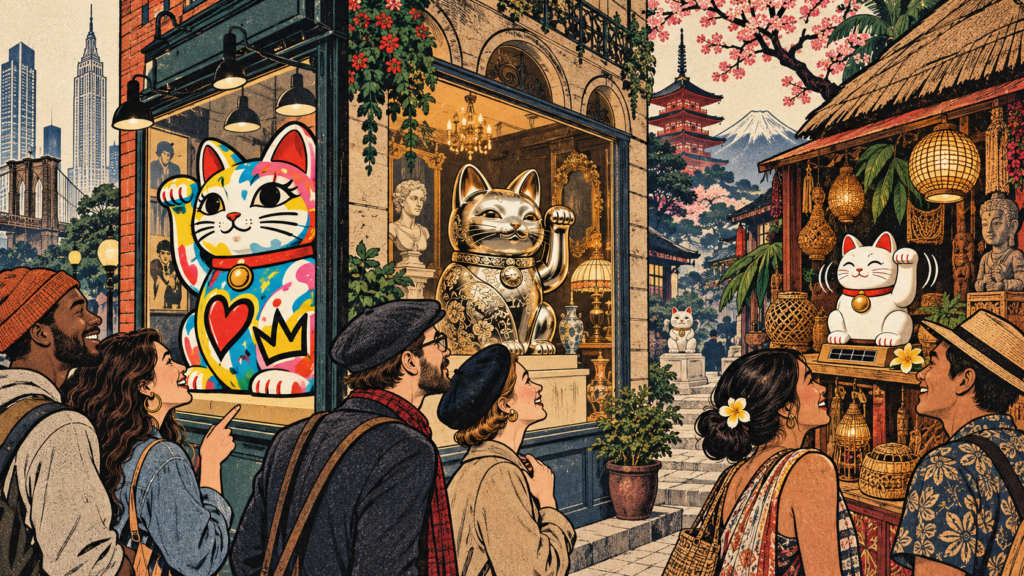
Outside Japan, maneki-neko can be found incorporating local flags, clothing, food cultures, sports teams, and elements of popular culture.
Their materials have also expanded beyond ceramics to include plastic, metal, wood, and even digital art.
This does not mean that the cat’s Japanese identity has been lost. The maneki-neko has always changed its appearance to suit different places and periods. That flexibility has allowed people around the world to create Lucky Cats of their own.
For international travelers, the maneki-neko is more than a charming souvenir. It can also serve as a gateway to Japan’s merchant culture, ceramics, temples and shrines, and the history of Edo.
A single Lucky Cat may inspire someone to discover Asakusa, Gotokuji Temple, Seto, Tokoname, or Kutani.
Because it is already loved around the world, the maneki-neko has the power to invite people not only into shops and homes, but also to destinations throughout Japan.
 history
 English