“Where was the maneki-neko born?” Even today, there is no single definitive answer to this question. Several different origin stories have been passed down, each shaped by temple legends, local memories, and Japan’s pottery traditions. The key is to distinguish between famous legends and the earliest examples supported by historical records. Here, we explore five of the best-known theories about the origins of the maneki-neko. 1. The Gotokuji Legend: The…
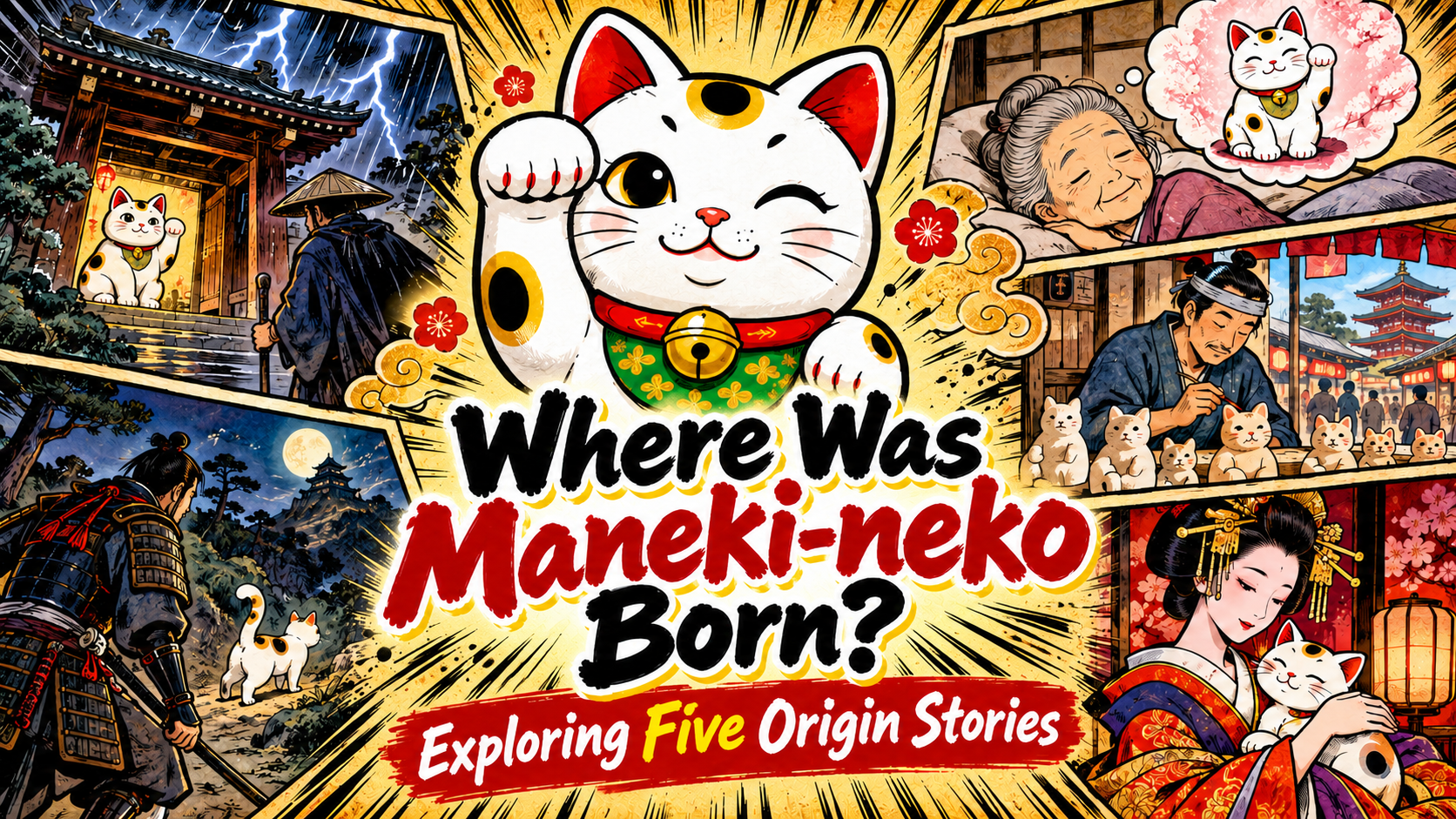
“Where was the maneki-neko born?”
Even today, there is no single definitive answer to this question. Several different origin stories have been passed down, each shaped by temple legends, local memories, and Japan’s pottery traditions.
The key is to distinguish between famous legends and the earliest examples supported by historical records. Here, we explore five of the best-known theories about the origins of the maneki-neko.
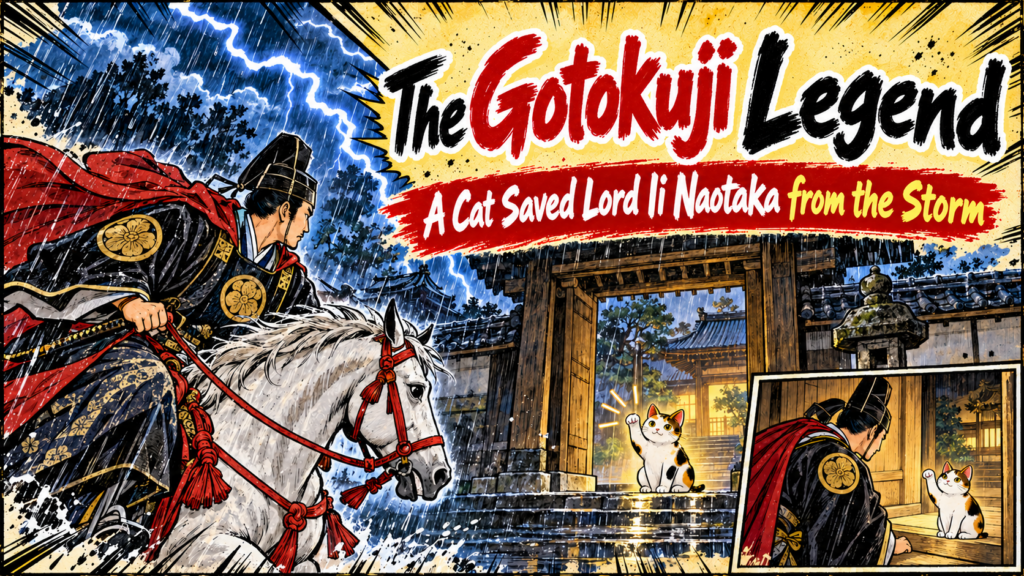
Gotokuji Temple in Setagaya, Tokyo, is associated with the famous story of Ii Naotaka, the feudal lord of the Hikone Domain, and a mysterious cat.
According to the legend, Naotaka was passing the temple when he noticed a cat near its gate that appeared to be beckoning him inside. He followed the cat and entered the temple. Soon afterward, a violent thunderstorm began.
The cat was said to have saved Naotaka from the storm while also giving him the opportunity to speak with the temple’s priest. This encounter established a close relationship between the temple and the Ii family. Gotokuji later became the family temple of the Ii clan and prospered under their patronage.
At Gotokuji, these cats are known as Shofuku Manekineko, meaning “beckoning cats that invite good fortune.”
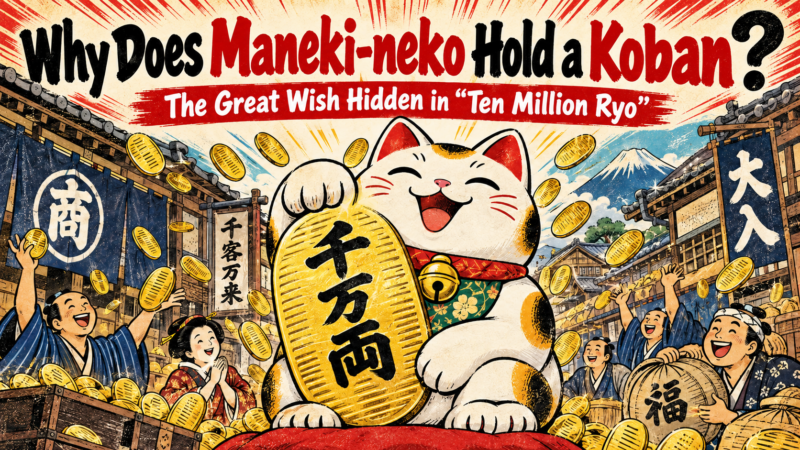
The many white cat figures offered at the temple do not carry koban coins. This reflects the belief that the cat does not give people wealth or good fortune directly. Instead, it invites valuable connections and opportunities—and it is up to each person to make the most of them.
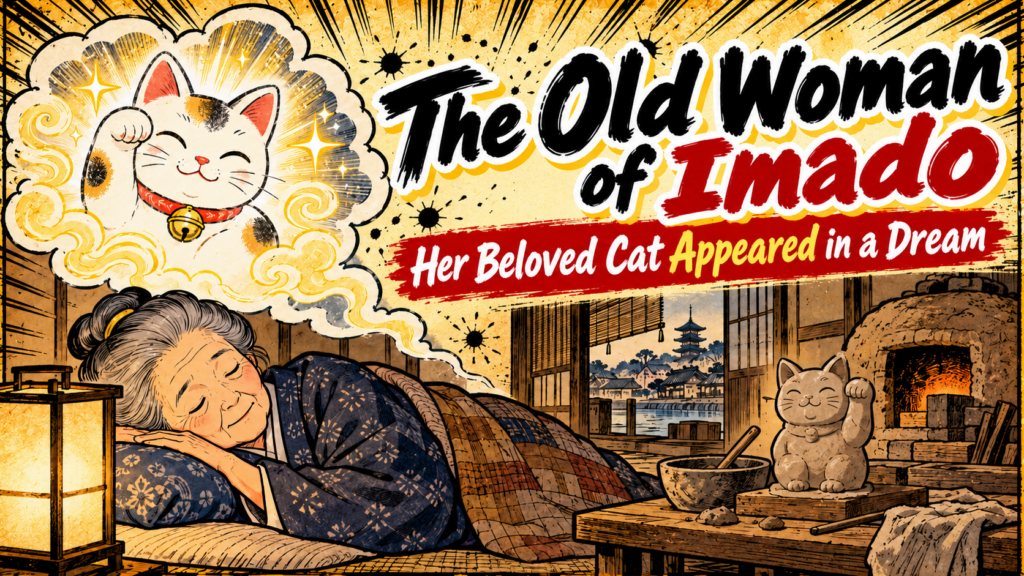
Another origin story comes from Imado, an area near Asakusa in Tokyo.
According to the legend, an elderly woman was forced to give up her beloved cat because she could no longer afford to care for it. One night, the cat appeared to her in a dream and told her to make a clay figure in its image and sell it.
The woman followed the cat’s instructions and created a small ceramic cat using the techniques of Imado ware. The figurines became popular, allowing her to rebuild her life.
This story connects the everyday culture of Asakusa with Imado ware, a local pottery tradition that produced roof tiles, household items, toys, and clay figures for ordinary people.
However, the relationship between this legend and the present-day Imado Shrine appears to include elements organized or added in later periods. For this reason, the story is best presented as a legend associated with the wider Imado area rather than as a historically proven event.
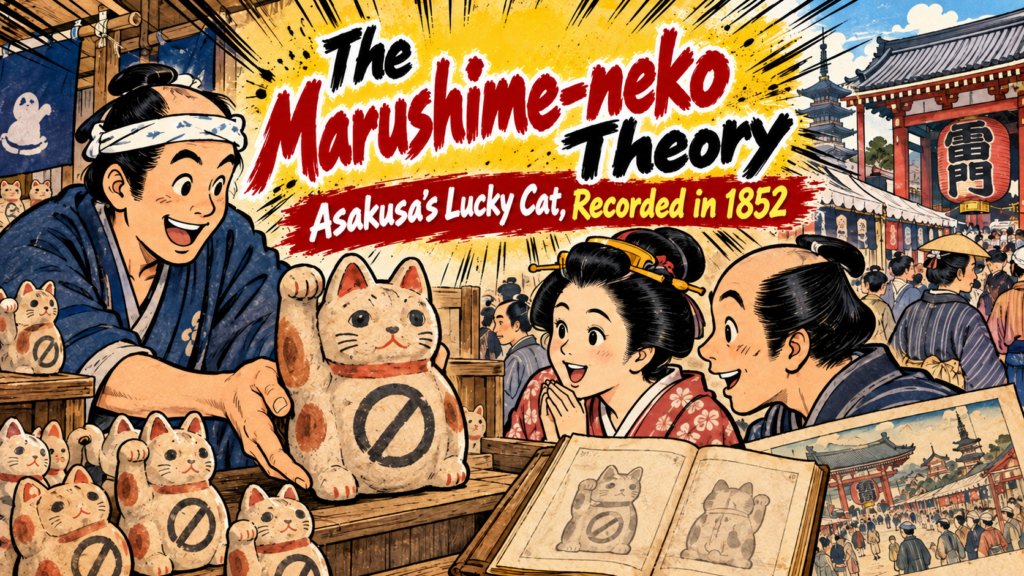
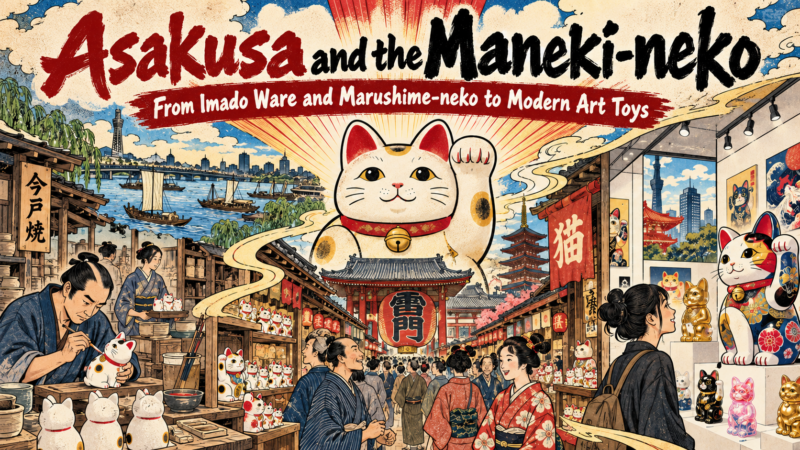
One of the most important figures in the study of maneki-neko origins is the Marushime-neko, a lucky cat associated with Imado ware.
These cat figures display a symbol combining a circle with the Japanese character shime. The mark is thought to represent the wish to “secure” good fortune and prevent money or prosperity from escaping.
A particularly important historical source is the Buko Nenpyo, a chronology of life in Edo. An entry from 1852 refers to clay cat figurines being sold around Sensoji Temple in Asakusa.
In the same year, Utagawa Hiroshige’s woodblock print Joruri-machi Hanka no Zu depicted a shop selling cat figures that are believed to be Marushime-neko.
The Marushime-neko is therefore extremely significant because it provides a physical design connected with the maneki-neko that can be traced through late Edo-period historical records.
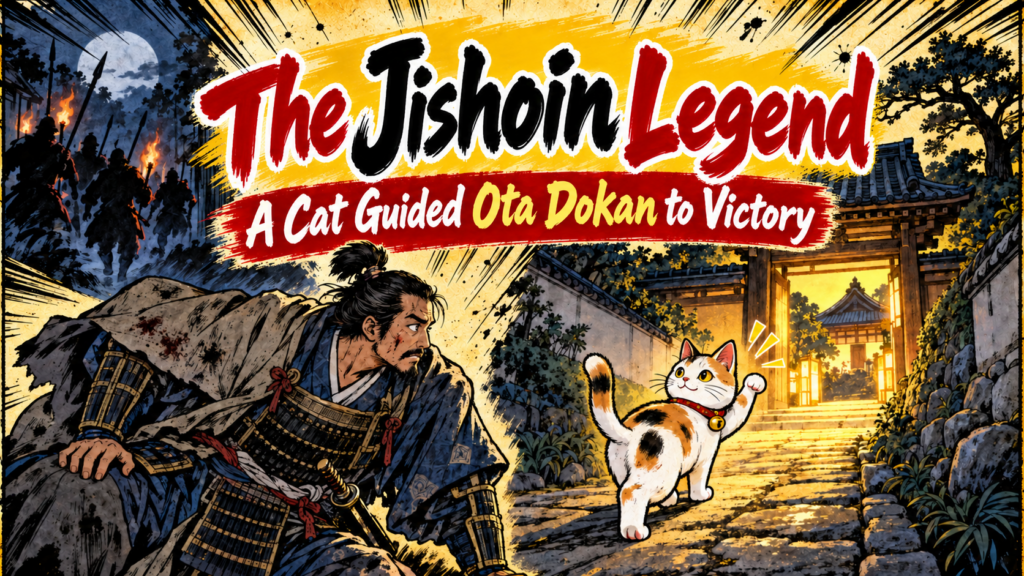
Jishoin Temple in Shinjuku, Tokyo, preserves a legend involving the samurai warrior Ota Dokan.
According to the story, Dokan became lost during a battle and found himself in a dangerous situation. A cat appeared and beckoned him toward the temple. After following the cat, Dokan was able to regain his position and eventually turn the battle in his favor.
Grateful for the cat’s guidance, Dokan is said to have dedicated a cat-shaped Jizo statue after the animal’s death.
The cat figure associated with Jishoin differs from the familiar commercial maneki-neko holding a large koban coin. Instead, the story represents a belief in the cat as a guide—an animal capable of rescuing people from danger and leading them toward the right path.
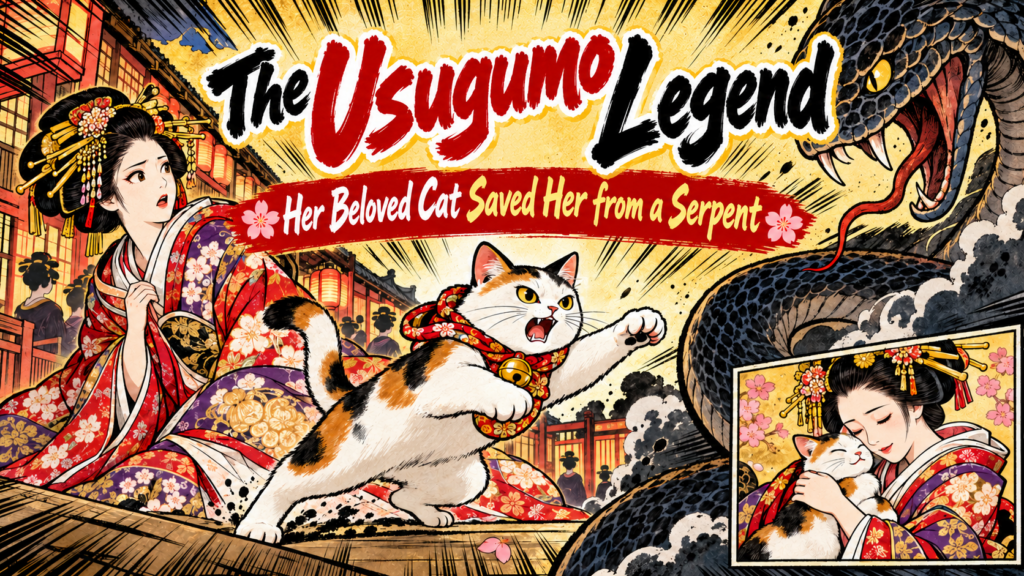
Another dramatic origin story is associated with Usugumo, a famous courtesan from Yoshiwara, Edo’s licensed entertainment district.
Usugumo was deeply attached to her pet cat, which followed her everywhere. One night, the cat behaved strangely and refused to leave her side. Believing that the animal had become dangerous or possessed, the proprietor of the establishment cut off the cat’s head.
The cat’s severed head then flew toward a large serpent that had been hiding nearby and bit it, saving Usugumo’s life.
Usugumo was devastated by the loss of her beloved companion. To comfort her, one of her customers presented her with a wooden carving of the cat. According to the legend, copies of this carving were later produced and sold, eventually inspiring the maneki-neko.
Although this is a dramatic and memorable story, it has not been established as the definitive historical origin of the maneki-neko. It should instead be understood as one of the legends passed down in connection with Yoshiwara.
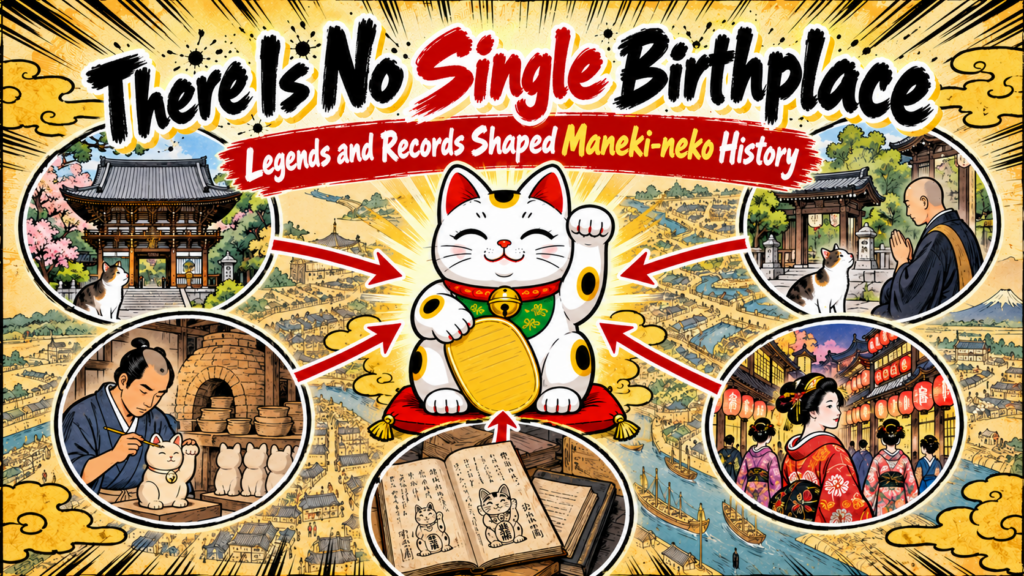
No surviving historical evidence proves that one particular temple, shrine, or artisan created the maneki-neko in the form we recognize today.
Gotokuji and Jishoin preserve stories of cats rescuing or guiding people. Imado had both the pottery techniques required to produce clay cat figures and a commercial culture through which they could be sold. These traditions were joined by beliefs about cats, prosperity, hospitality, and commercial success.
It is therefore reasonable to conclude that the recognizable maneki-neko gradually took shape in 19th-century Edo through a combination of legends, beliefs, craftsmanship, and popular culture.
Part of the maneki-neko’s appeal lies in the fact that it has no single, undisputed birthplace. Several communities have preserved their own stories about fortunate cats—and together, these stories have created the rich and diverse culture of the maneki-neko.
 Basics
 Basics