If you want to gain a deeper understanding of the maneki-neko, one of the best ways is to visit the temples, shrines, pottery towns, and museums connected with its history. From places associated with origin legends to towns renowned for ceramic production, here are 15 of Japan’s most notable maneki-neko destinations. Opening hours, closed days, exhibitions, and festival schedules are subject to change. Always check each destination’s official website before…
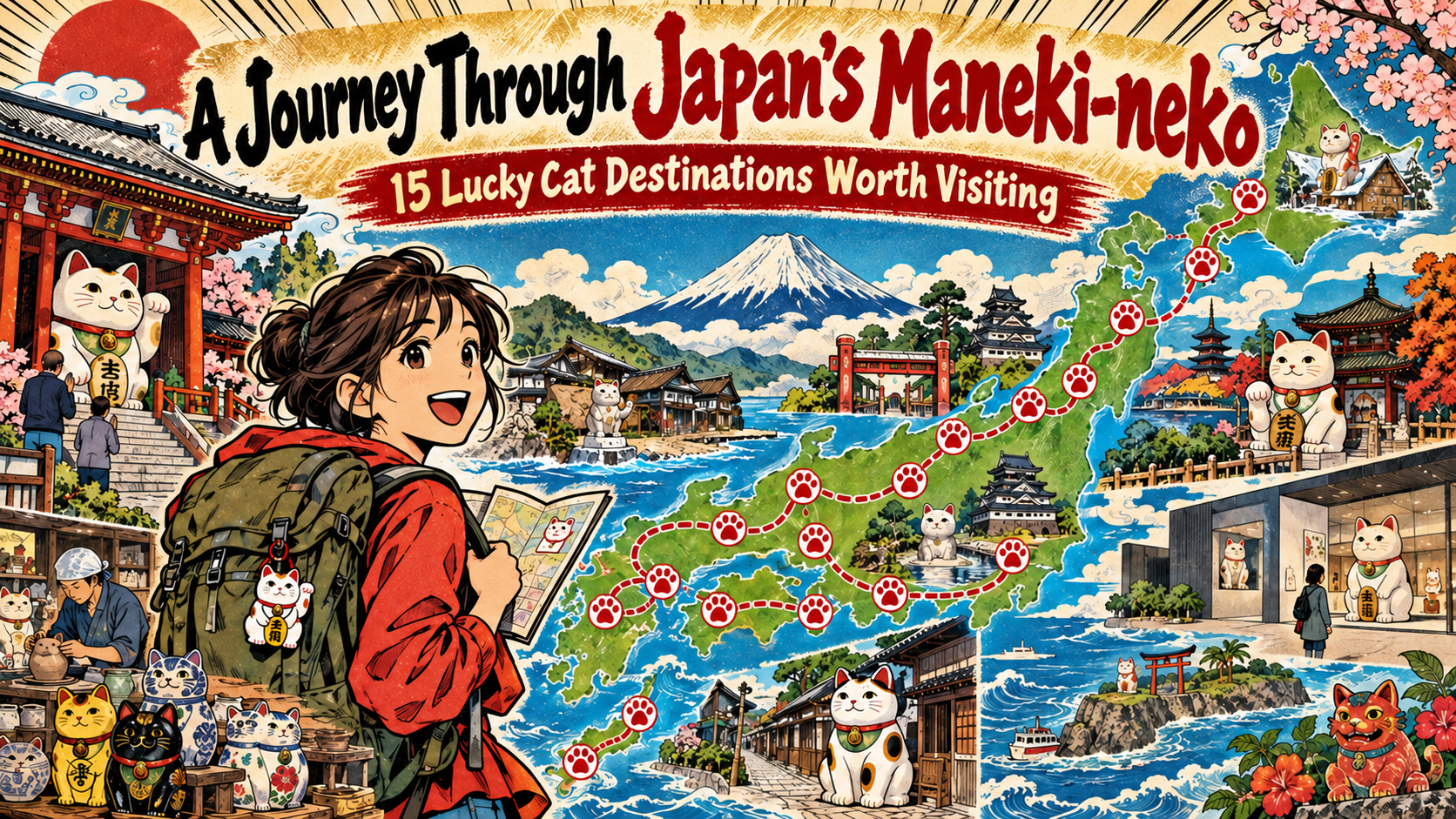
If you want to gain a deeper understanding of the maneki-neko, one of the best ways is to visit the temples, shrines, pottery towns, and museums connected with its history.
From places associated with origin legends to towns renowned for ceramic production, here are 15 of Japan’s most notable maneki-neko destinations.
Opening hours, closed days, exhibitions, and festival schedules are subject to change. Always check each destination’s official website before visiting.
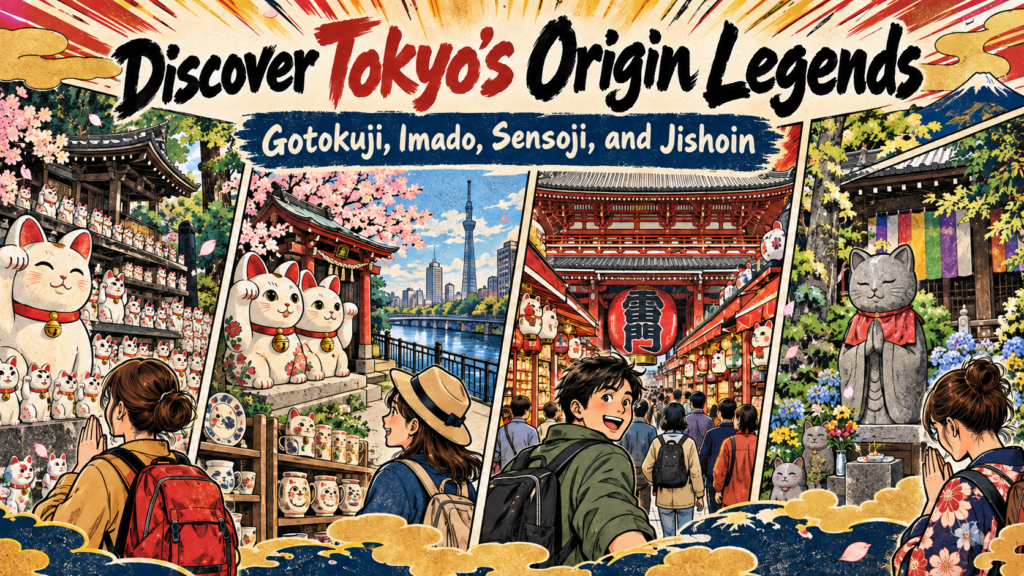
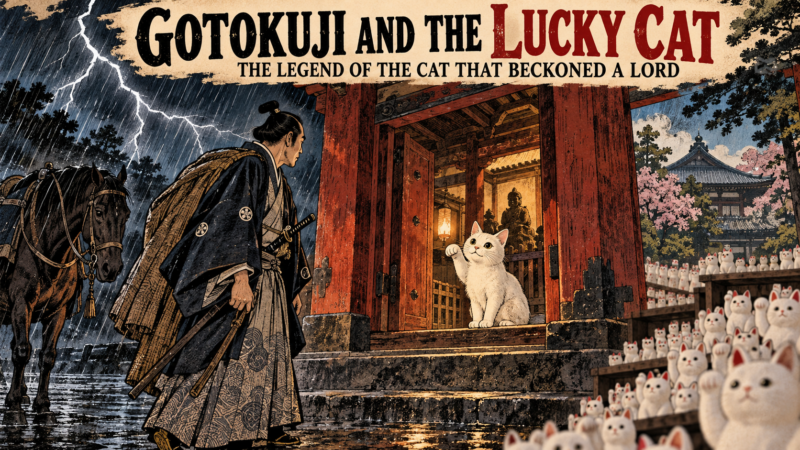
Gotokuji is famous for the legend of a cat that beckoned Ii Naotaka, lord of the Hikone Domain, and saved him from a thunderstorm.
Around the temple’s Shofukuden Hall, countless white lucky cat figures have been offered by visitors whose wishes came true. Notice their simple appearance: unlike many familiar maneki-neko, these cats do not hold koban gold coins.
Located north of central Asakusa, Imado has deep connections with Imado ware and the Marushime-neko, a clay cat figure considered one of the predecessors of today’s maneki-neko.
Do not limit your visit to the shrine. A walk through the neighborhood along the Sumida River will help you understand the geography and environment in which Imado pottery developed.
Historical records and woodblock prints from 1852 show that clay cat figurines were being sold around Sensoji Temple.
Today, visitors can still discover many varieties of maneki-neko in the area’s souvenir shops. Asakusa remains a town where the long-standing culture of buying lucky cats continues to thrive.
Jishoin is associated with a legend in which a cat guided the samurai commander Ota Dokan to safety. Because of this connection, it is sometimes known as the “Cat Temple.”
The temple’s cat-shaped Jizo statues may only be shown to the public during limited periods, so check the latest information before visiting.
Ome’s shopping district has used cats as part of its community revitalization efforts, and Sumiyoshi Shrine enshrines a feline guardian believed to watch over the town’s prosperity.
Visitors can enjoy both the nostalgic atmosphere of a Showa-era streetscape and the many cat-themed artworks found throughout the neighborhood.
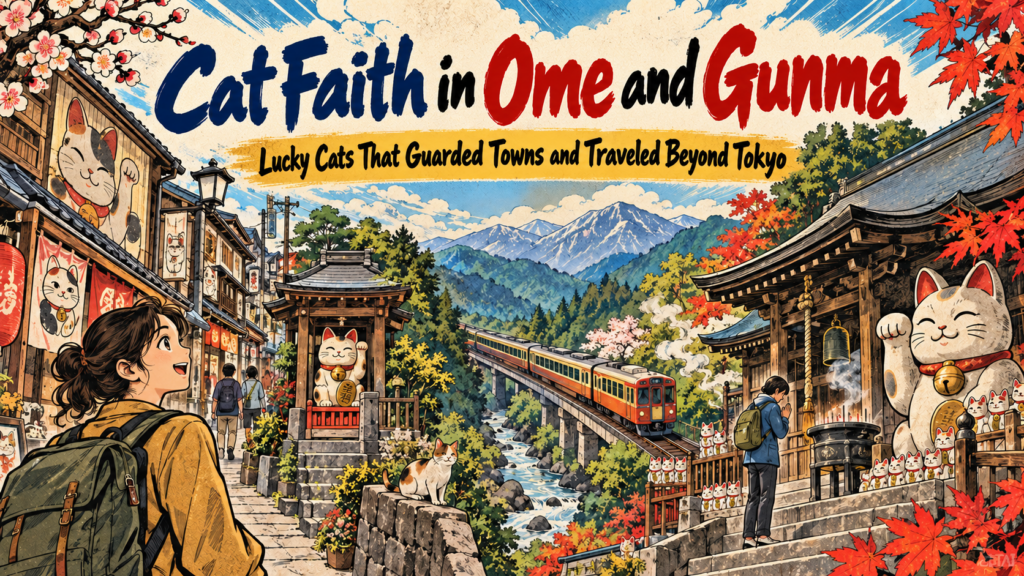
Kaiunji is a temple associated with the maneki-neko and is said to have received an incarnation of the Shofuku Kannon from Gotokuji Temple.
It is an intriguing destination for learning how lucky-cat beliefs spread from Tokyo to other parts of Japan.
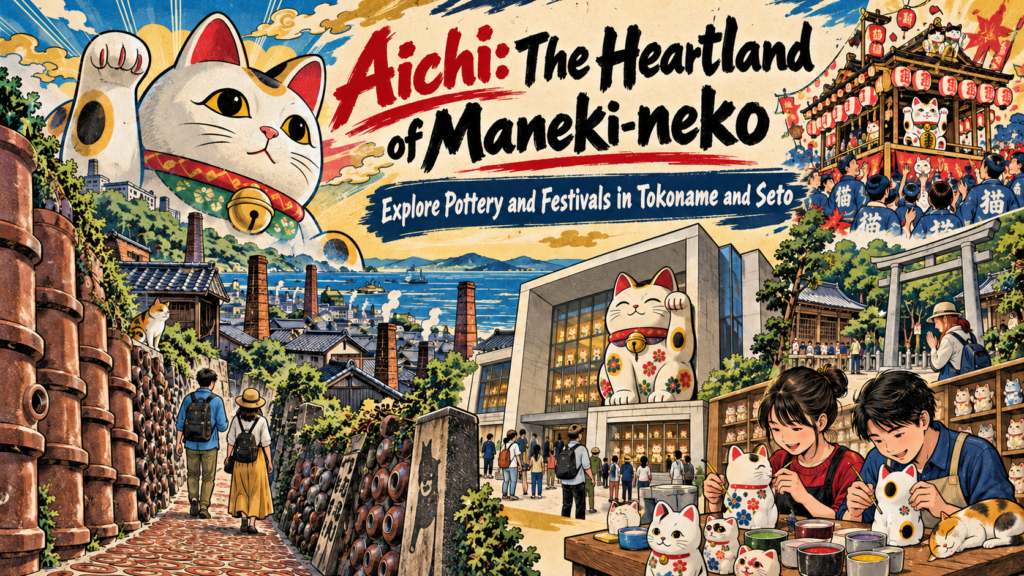
The route from Meitetsu Tokoname Station toward the Pottery Footpath is lined with a colorful variety of lucky cats.
Highlights include Tokonyan, an enormous maneki-neko head overlooking the town, and ceramic cats created by different artists, each representing a particular blessing. It is a destination where the entire town celebrates maneki-neko culture.
This walking route takes visitors through an industrial landscape filled with historic kilns, brick chimneys, ceramic pipes, and old shochu bottles.
By exploring the town on foot, visitors can better understand how a major producer of ceramic pipes also became an important center for the mass production of maneki-neko.
This specialist museum allows visitors to compare lucky cats from different regions of Japan.
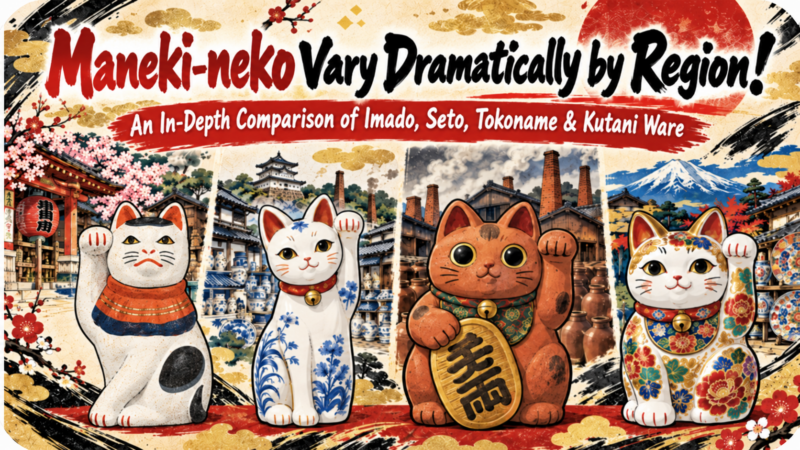
Seto is said to have begun the mass production of porcelain maneki-neko during the late 1890s and early 1900s. The museum traces changes in their appearance, from the slender antique Seto style to contemporary artists’ creations.
Usually held around September, the Kurufuku Manekineko Festival is a citywide celebration devoted to the lucky cat.
Visitors can enjoy the “100 Maneki-neko Artists Exhibition,” painting workshops, limited-edition artworks, cat-themed merchandise, and even special food inspired by maneki-neko.
The Tokoname Ceramics Hall introduces visitors to the history of Tokoname ware as well as products made in the region today.
It is an excellent place to see the connection between local craftsmanship and the familiar Tokoname-style maneki-neko, known for its round face, large eyes, and oversized koban coin.
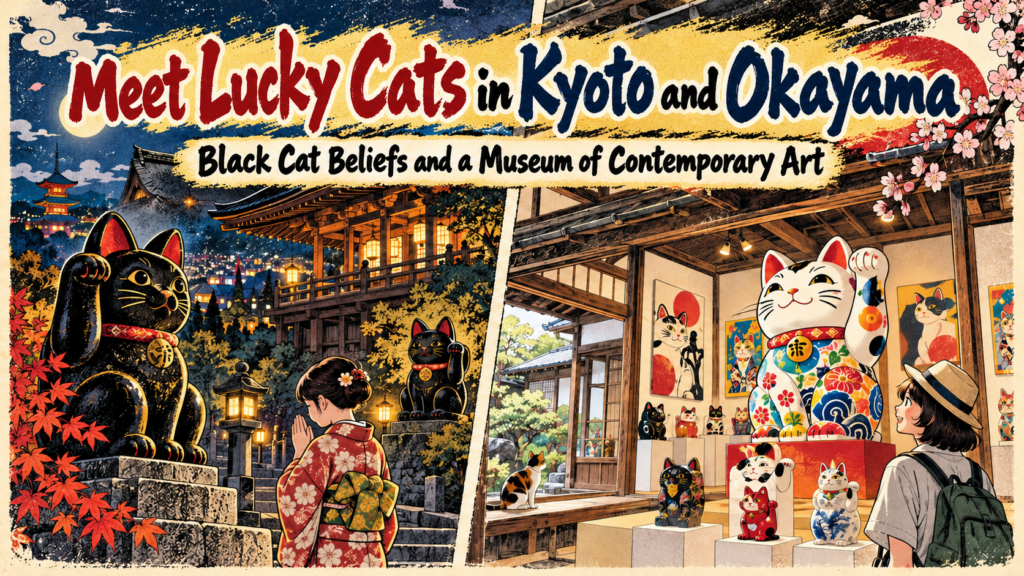
Danno Horinji is known for its Shuyajin deity and black maneki-neko.
The black lucky cat is associated with protection from misfortune and with guarding people through the night. It offers a different expression of maneki-neko belief from the more familiar white or gold cats. Check the latest public viewing information before visiting.
Housed in a renovated traditional Japanese home, this museum displays an impressive variety of maneki-neko, ranging from historic folk objects to contemporary artworks.
In addition to viewing the collection, visitors may also have the opportunity to participate in maneki-neko painting workshops.
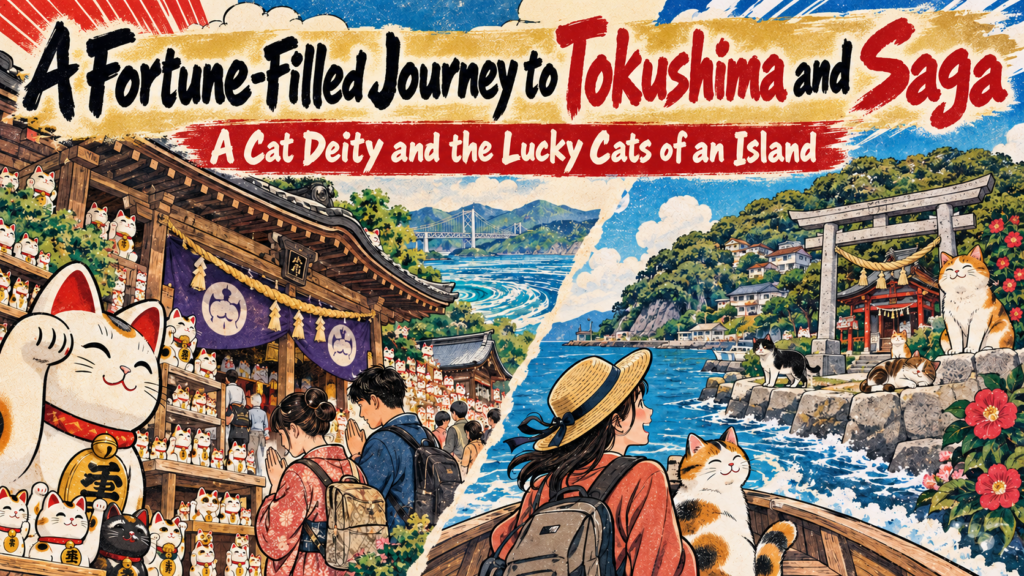
Known as a shrine dedicated to a “cat deity,” Omatsu Daigongen is filled with maneki-neko offered by worshippers.
Visitors come to pray for success in competitions, entrance examinations, and personal wishes. Cat figures can be found throughout the shrine grounds, making the entire visit feel like a treasure hunt.
Located on a small island, Hoto Shrine is widely known as a place where people pray for good luck in winning the lottery.
Cats are cherished as symbols of fortune across the island, making Takashima a popular destination for travelers hoping to encounter maneki-neko and other “cats that bring good luck.”
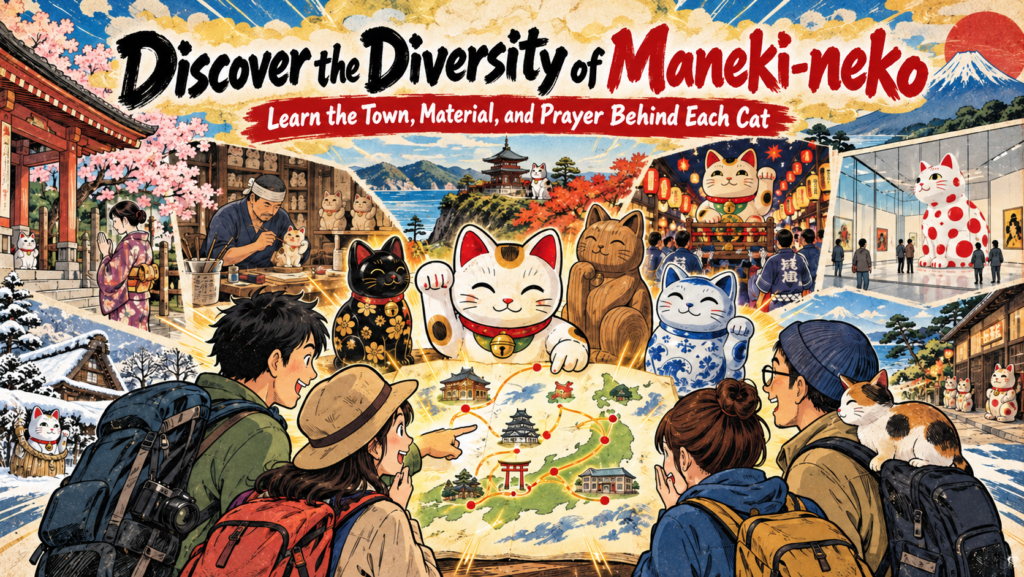
In Tokyo, visitors can explore origin legends and the popular culture of Edo. In Aichi, they can discover pottery industries and mass-production techniques. Kyoto and Tokushima reveal the maneki-neko’s connection with religious belief, while Okayama presents it as a form of art.
Rather than looking only at the figurine itself, consider the town where it was created, the material from which it was made, and the prayers entrusted to it.
Once you understand these elements, the maneki-neko becomes more than a charming souvenir. It becomes a cultural guide connecting the many histories and traditions of Japan.
 English
 Kilns & Craft