You may have seen one sitting at the entrance to a shop or home: a cat with one paw raised as if beckoning someone closer. Known as maneki-neko, this figure is one of Japan’s most recognizable good-luck charms. It is believed to invite good fortune, customers, business success, wealth, and positive relationships. Outside Japan, maneki-neko are also commonly known as “Lucky Cats” or “Fortune Cats.” What Does a Maneki-neko Invite?…
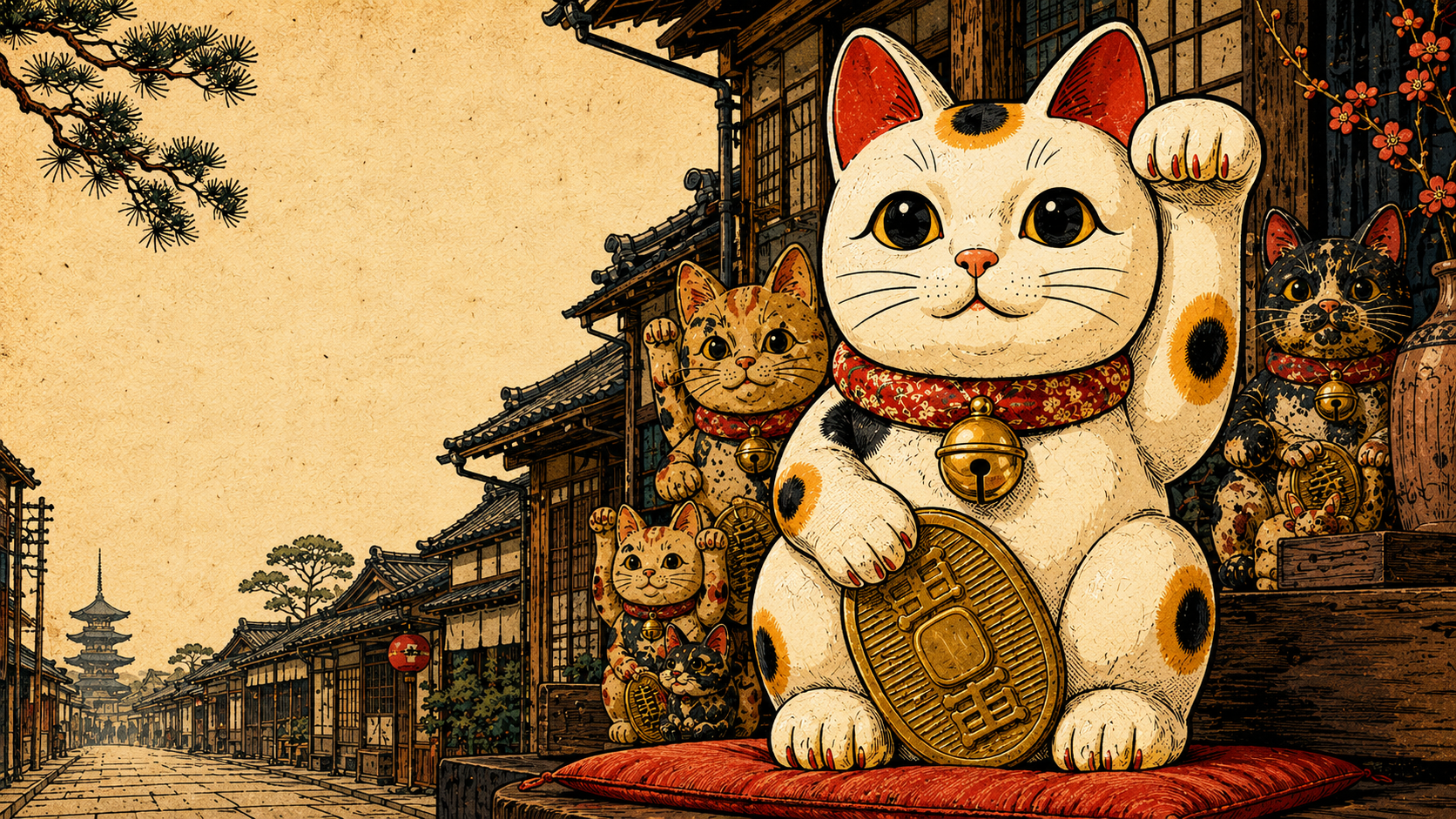
You may have seen one sitting at the entrance to a shop or home: a cat with one paw raised as if beckoning someone closer. Known as maneki-neko, this figure is one of Japan’s most recognizable good-luck charms. It is believed to invite good fortune, customers, business success, wealth, and positive relationships.
Outside Japan, maneki-neko are also commonly known as “Lucky Cats” or “Fortune Cats.”
A maneki-neko does not simply invite money. For business owners, it may welcome customers and commercial success. In the home, it can represent good fortune, happiness, and meaningful relationships.
According to the most widely known interpretation, a cat raising its right paw invites money and good fortune, while one raising its left paw welcomes people and customers.
However, this is not a strict rule observed throughout Japan. Meanings sometimes differ depending on the region, pottery tradition, or individual artist. This freedom of interpretation is part of what makes maneki-neko culture so fascinating.
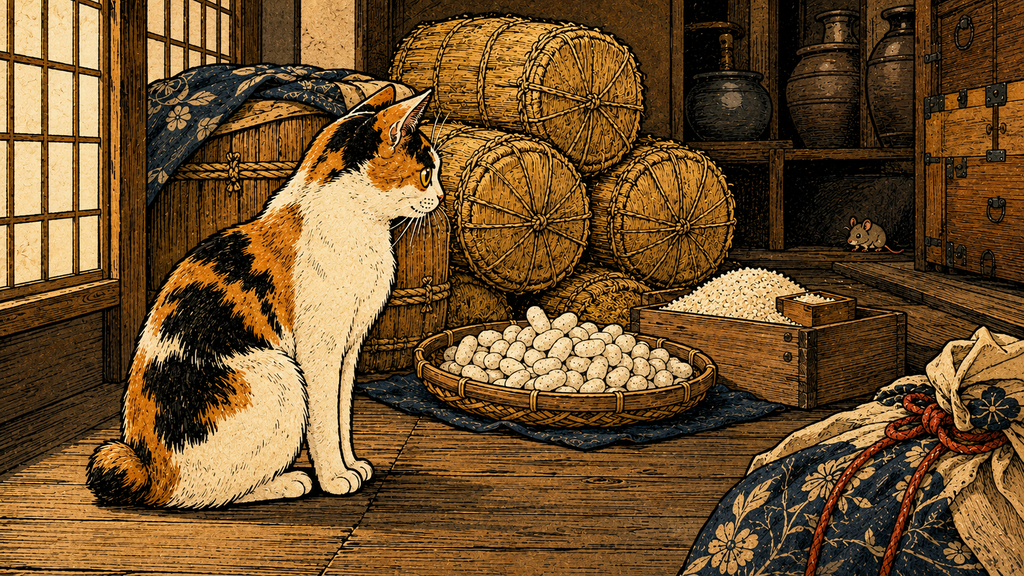
Cats have long played an important role in Japanese life. They protected stored grain and silkworms from mice, making them especially valuable to farmers, merchants, and families involved in the silk industry. Cats were not merely pets—they helped protect people’s livelihoods and possessions.
There is also an old Japanese saying that when a cat washes its face, a visitor will soon arrive. The movement of a cat lifting its paw toward its face may have looked like the Japanese gesture used to beckon someone closer. This is believed to be one of the influences behind the familiar pose of the maneki-neko.
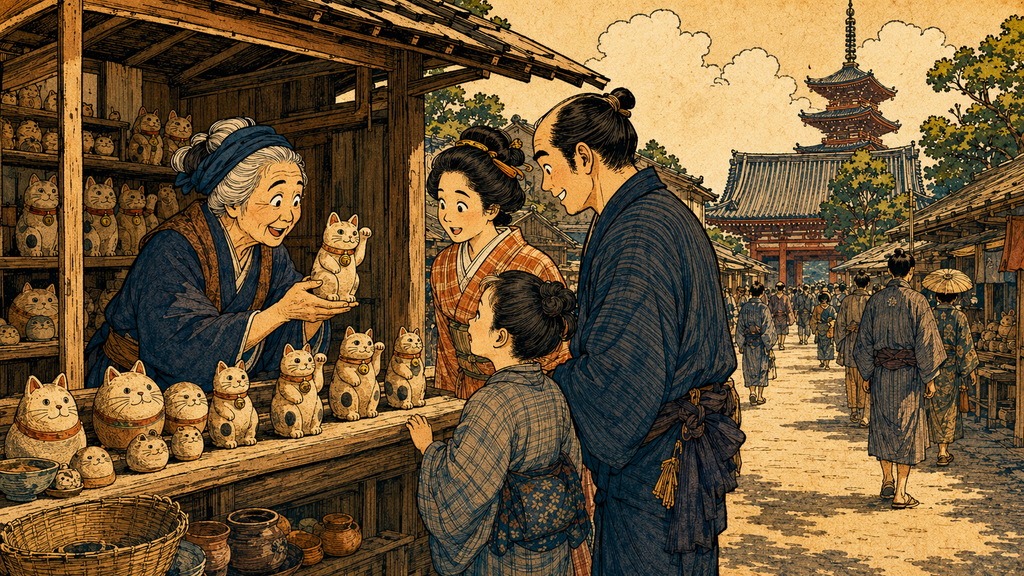
The origin of the maneki-neko cannot be traced to one definitive place or event. Several origin legends survive, particularly in Tokyo. Famous locations connected with these stories include Gotokuji Temple, the Imado area of Asakusa, Jishoin Temple, and the former Yoshiwara entertainment district.
Historical records from the late Edo period provide more concrete evidence.
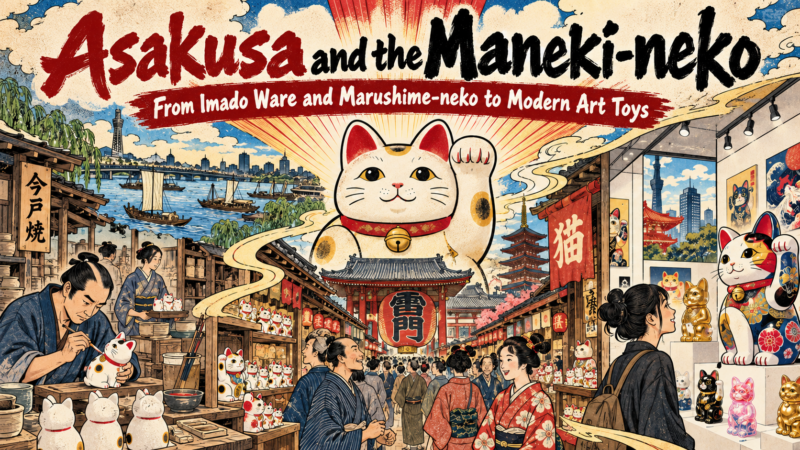
A record from 1852 mentions cat figurines being sold around Sensoji Temple in Asakusa. In the same year, Utagawa Hiroshige’s woodblock print Joruri-machi Hanka no Zu depicted a vendor selling what appear to be marushime-neko—lucky cat figures associated with Imado ware.
These sources suggest that by the middle of the 19th century, people in Edo, now Tokyo, were already buying cat figurines as objects believed to invite good fortune.
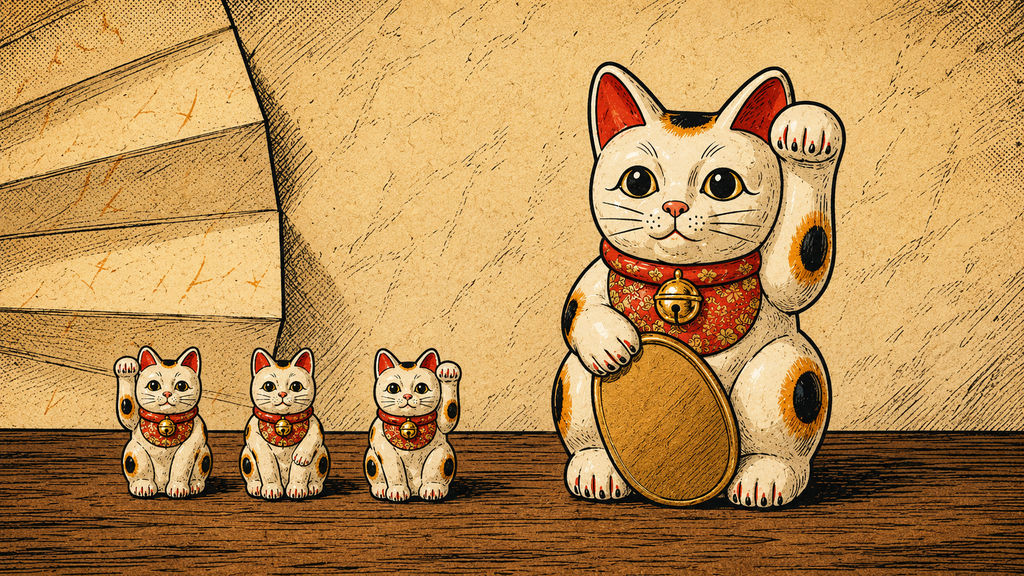
The raised paw is only one of the meaningful elements found on a traditional maneki-neko.
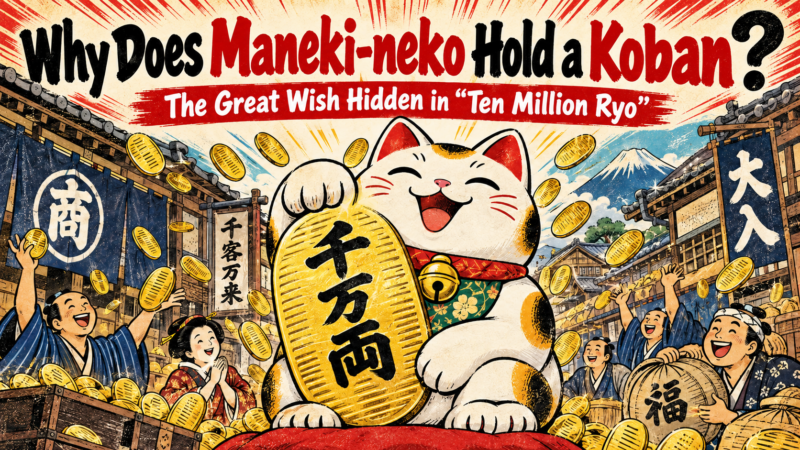
Its collar and bell recall the appearance of cherished pet cats during the Edo period. The decorative bib is sometimes associated with the red bibs offered to Jizo statues, Buddhist figures traditionally believed to protect children. The large oval coin, or koban, symbolizes wealth and commercial prosperity.
However, not every maneki-neko carries a coin. The white shofuku manekineko figures associated with Gotokuji Temple, for example, have a simple appearance and do not hold a koban.
Maneki-neko have been produced in many of Japan’s famous pottery regions, including Imado, Seto, Tokoname, and Kutani.
Over time, different colors—including white, black, red, and gold—have acquired their own symbolic meanings. The maneki-neko has also expanded beyond traditional ceramic figures into coin banks, wooden carvings, papier-mâché figures, contemporary art, and designer toys.
Perhaps maneki-neko have remained popular for so long because they allow people to place their hopes for happiness and good fortune into the familiar, comforting form of a cat.
There has never been just one fixed design. Every generation has added new meanings, colors, materials, and artistic interpretations. This ability to change is proof that the maneki-neko is not simply an object from the past, but a living part of Japanese culture.
The maneki-neko grew from the beliefs, businesses, and everyday lives of people in Edo-period Japan. It later spread throughout the country as a symbol of commercial success, good fortune, and welcoming hospitality.
Its origins are connected with several different legends, while its raised paws, colors, clothing, and accessories carry a wide variety of meanings.
Within this small figure is a wish that Japanese people have nurtured for generations: the hope of welcoming good fortune into their lives.
 Basics
 Basics