Look closely at a maneki-neko and you may see it holding a large, oval-shaped gold coin against its chest. The coin may be inscribed with words such as “One Thousand Ryō,” “Ten Million Ryō,” “Good Fortune,” or “Good Luck.” But why did these beckoning cats come to hold koban coins? Koban: A Symbol of Wealth in the Edo Period A koban was an oval-shaped gold coin used during Japan’s Edo…
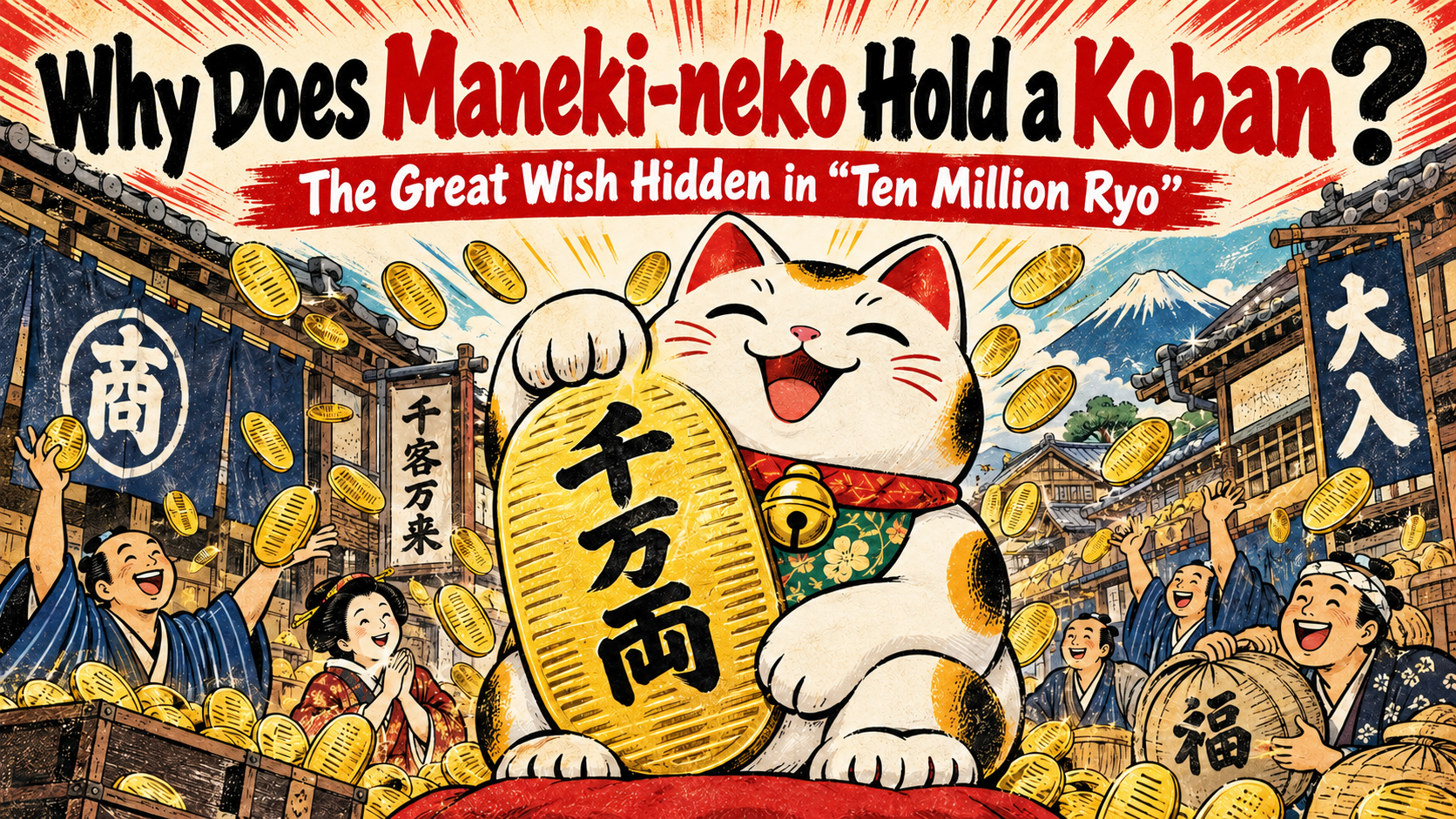
Look closely at a maneki-neko and you may see it holding a large, oval-shaped gold coin against its chest. The coin may be inscribed with words such as “One Thousand Ryō,” “Ten Million Ryō,” “Good Fortune,” or “Good Luck.” But why did these beckoning cats come to hold koban coins?
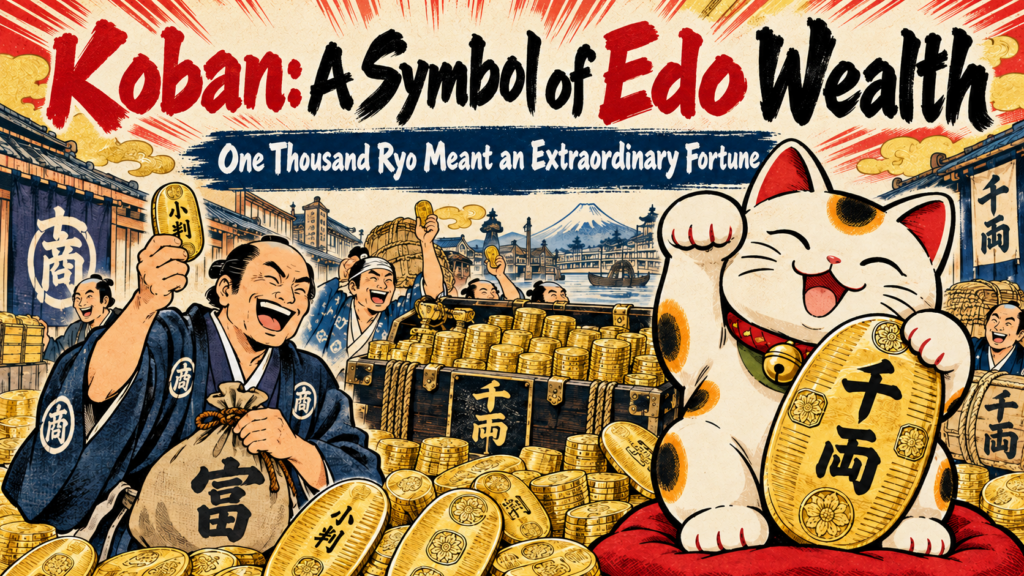
A koban was an oval-shaped gold coin used during Japan’s Edo period. Expressions such as senryō yakusha—a “thousand-ryō actor”—and senryō-bako, a chest containing one thousand ryō, still survive in the Japanese language. In these expressions, one thousand ryō represents an extraordinary fortune.
The image of a maneki-neko holding a large koban instantly communicates wishes for financial luck and success in business.
The amounts written on these coins grew over time, from “One Thousand Ryō” to “Ten Thousand Ryō,” “One Million Ryō,” and even “Ten Million Ryō.” These figures were not intended to represent exact sums of money. Instead, they were auspicious exaggerations expressing the wish for immeasurably great fortune.
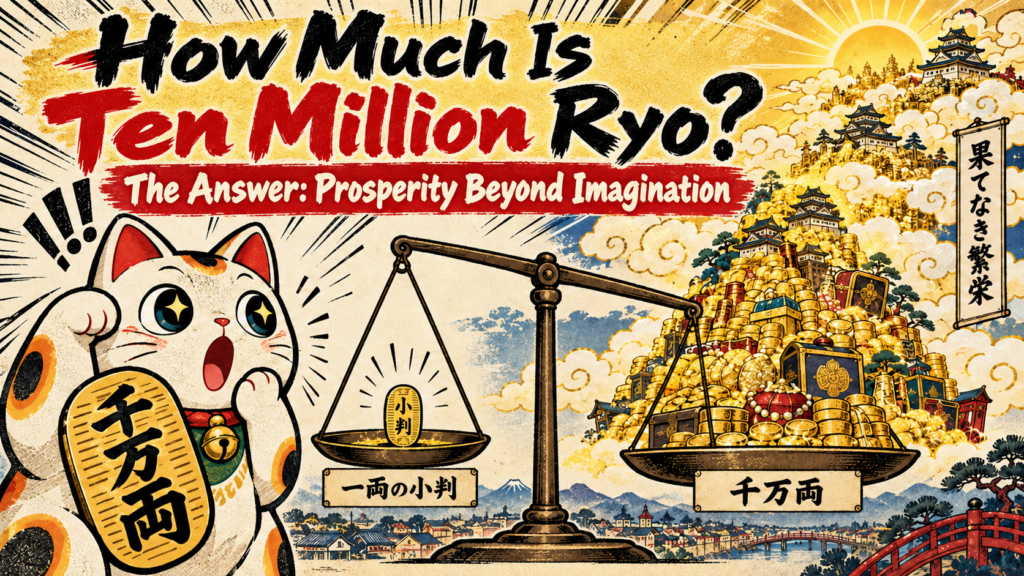
The value of one ryō changed significantly depending on the historical period and the method used to calculate it. For this reason, it cannot be converted accurately into a fixed amount of modern Japanese yen.
The result differs depending on whether the calculation is based on the price of rice, workers’ wages, or the value of gold.
It is therefore more natural to understand “Ten Million Ryō” not as a precise amount, but as an expression meaning “prosperity beyond imagination.”
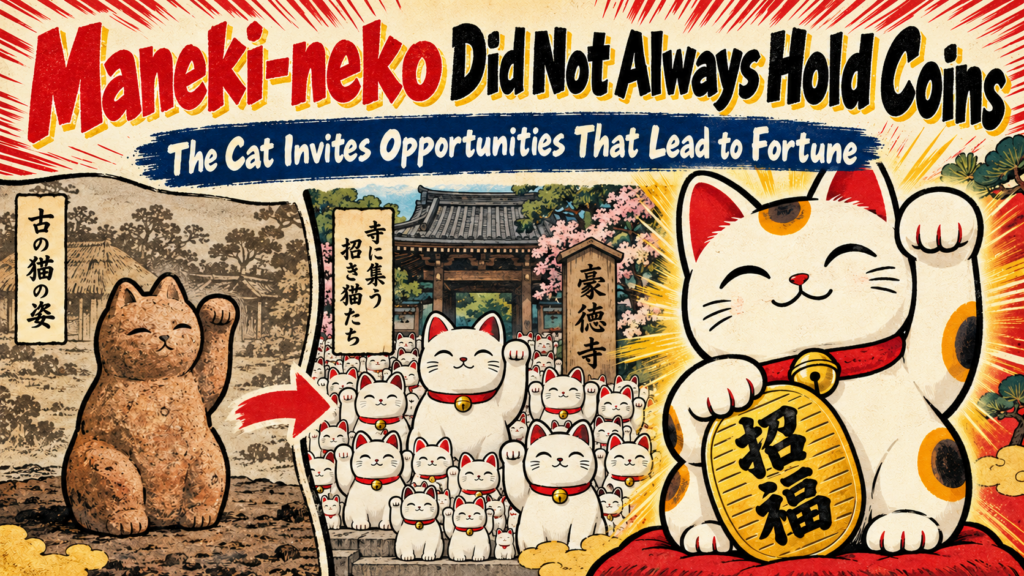
Not every early maneki-neko—or cat figurine regarded as a predecessor of the modern maneki-neko—held a koban.
The coin-carrying design is believed to have become a standard feature as maneki-neko grew increasingly popular as charms for prosperity in business.
The white shōfuku manekineko figures at Gōtokuji Temple still do not hold koban coins. This appearance fits the temple’s belief that the cat does not give money or good fortune directly. Instead, it invites relationships and opportunities that may lead to good fortune—how those opportunities are used depends on the individual.
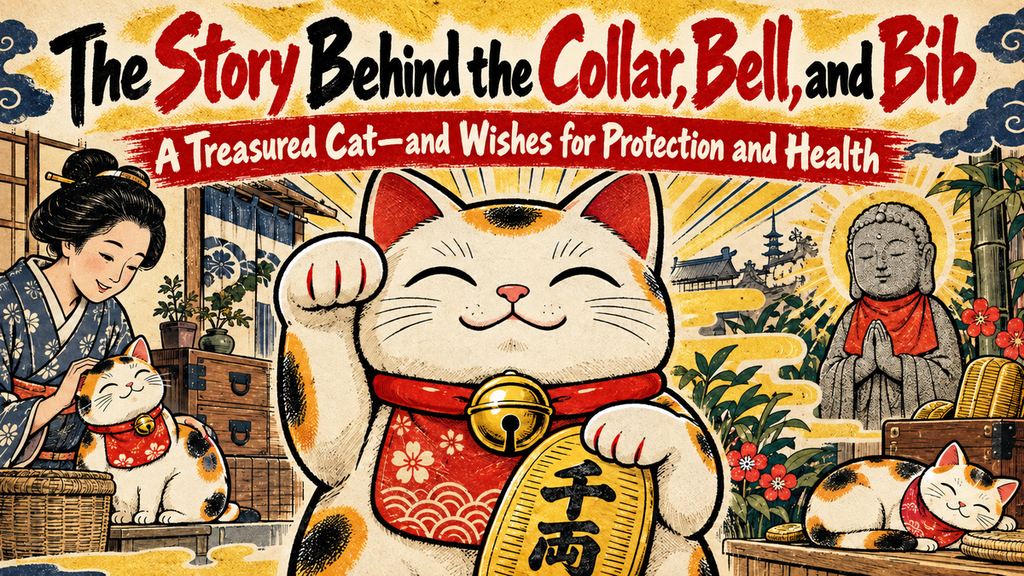
The koban is not the only meaningful feature of a maneki-neko.
During the Edo period, cats kept by wealthy households were sometimes given collars and bells to prevent them from becoming lost. Ukiyo-e prints also depict cats wearing red collars and decorative crepe-fabric ornaments.
The collar and bell seen on maneki-neko are therefore believed to reflect the appearance of cats that were treasured and carefully cared for.
The bib is sometimes connected with the red bibs offered to Jizō statues, which are associated with the protection and well-being of children. A red bib may also carry wishes for protection from evil and good health.
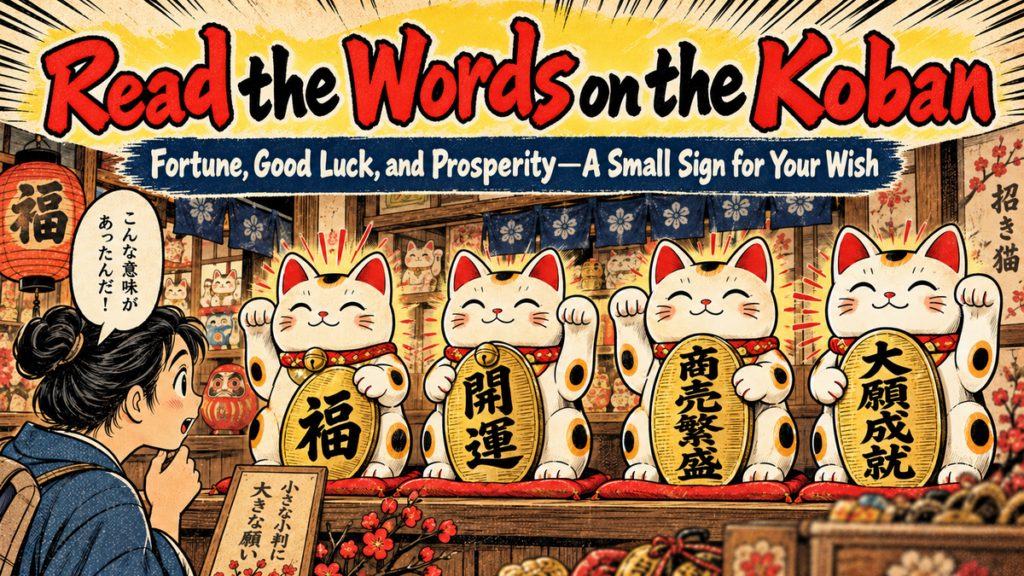
When looking at a maneki-neko, pay attention not only to its face and raised paw but also to the words written on its koban.
You may find inscriptions such as:
Some maneki-neko also display a shop name, regional name, commemorative year, or a phrase chosen by the artist.
The koban is more than a decorative accessory. It is like a small signboard on which the owner’s wishes can be expressed.
 Basics
 Basics