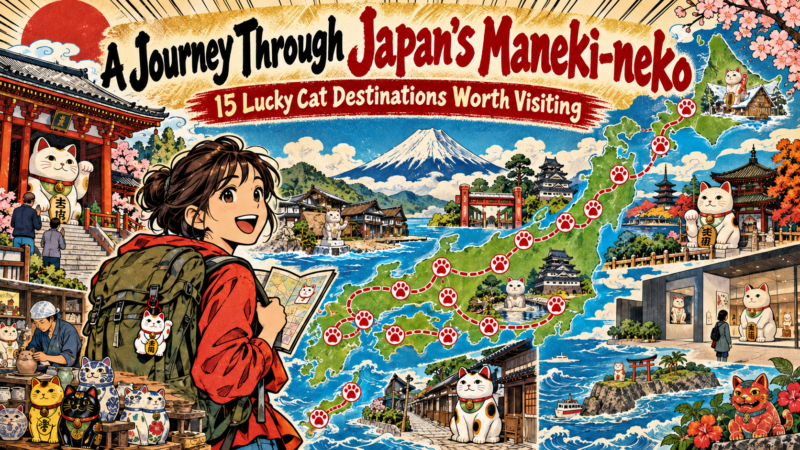
Although they are all maneki-neko, their appearances can be remarkably different. Some are slender and elegant, some have round faces and large eyes, some are decorated with vivid colors, while others retain the rustic warmth of clay. These differences developed from the materials, techniques, and histories of the regions in which they were made. Imado Ware: Rustic Cats Born from Edo Popular Culture Imado ware was traditionally produced around the…
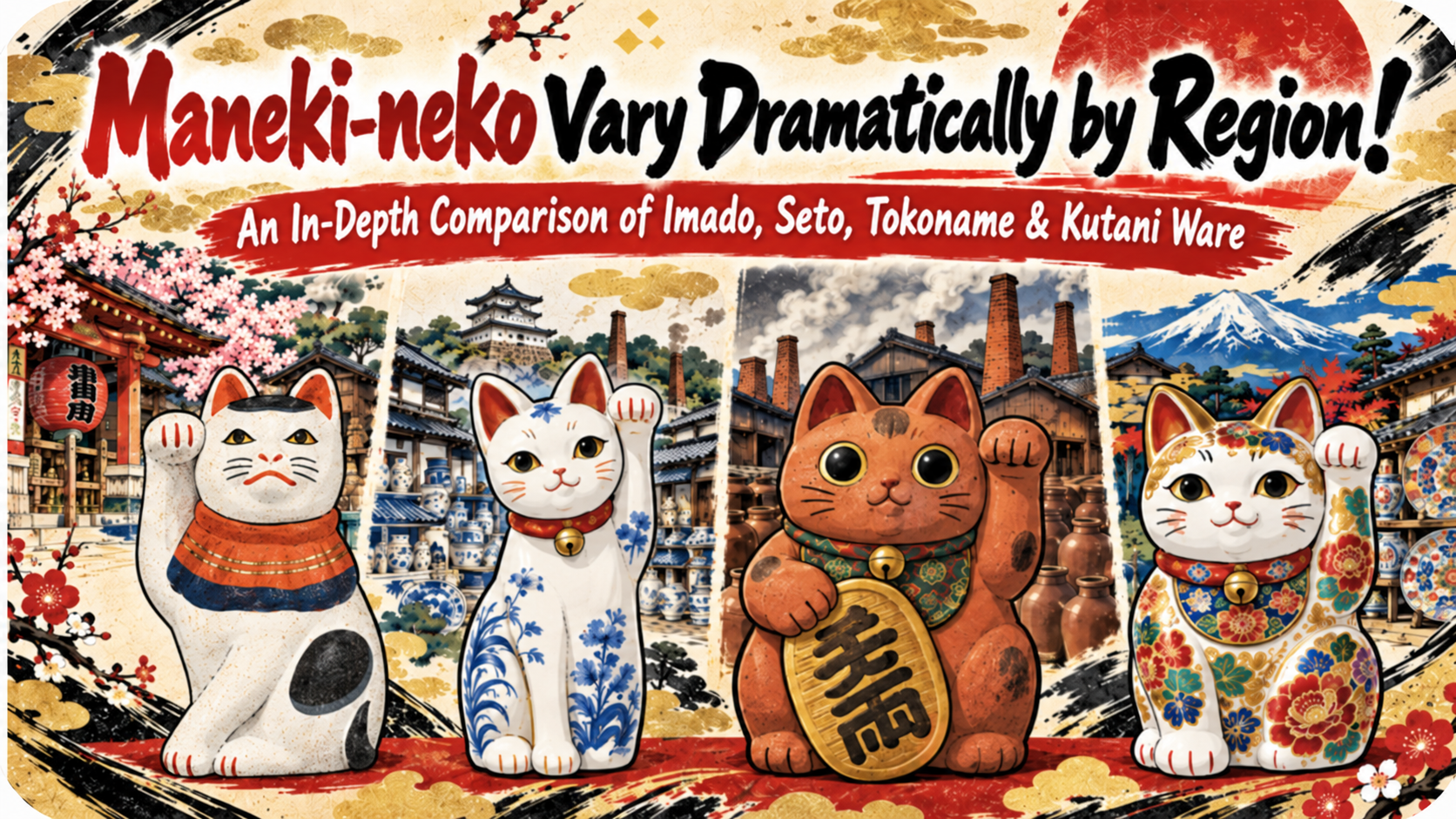
Although they are all maneki-neko, their appearances can be remarkably different. Some are slender and elegant, some have round faces and large eyes, some are decorated with vivid colors, while others retain the rustic warmth of clay.
These differences developed from the materials, techniques, and histories of the regions in which they were made.
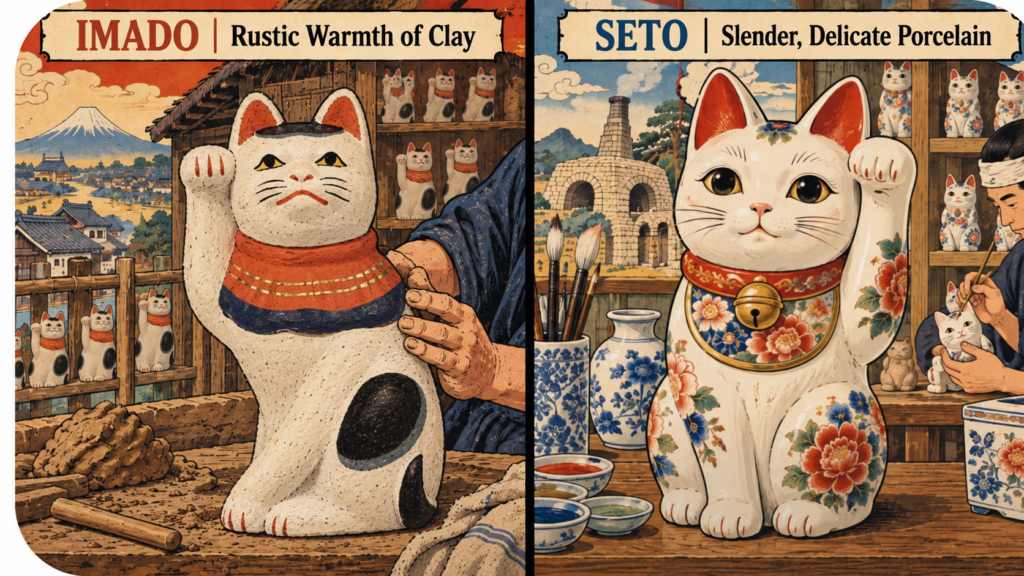
Imado ware was traditionally produced around the Imado area of Asakusa, Tokyo. Alongside roof tiles and household goods, local craftspeople also created affordable clay figurines for ordinary people.
Marushime-neko, regarded as one of the early forms that influenced the development of the modern maneki-neko, is one of the best-known lucky charms associated with Imado ware.
Its handmade warmth, simple colors, and distinctive form reflect the souvenir culture of Edo-period Asakusa.
The appeal of Imado ware does not lie in perfect uniformity. Instead, it comes from the visible presence of the maker, with each figure displaying subtle differences created by hand.
Seto City in Aichi Prefecture is said to have begun Japan’s first mass production of porcelain maneki-neko during the late 1890s and early 1900s.
Cats known as the traditional Seto style generally have relatively small heads, slender bodies, and elegant proportions that resemble real cats.
Detailed decoration stands out beautifully against their smooth white porcelain surfaces. Seto maneki-neko may feature carefully rendered fur, bells, floral patterns, and finely shaped decorative bibs.
Some pieces must be fired several times to apply different colors. Their elegant appearance is therefore supported by sophisticated ceramic techniques and considerable craftsmanship.
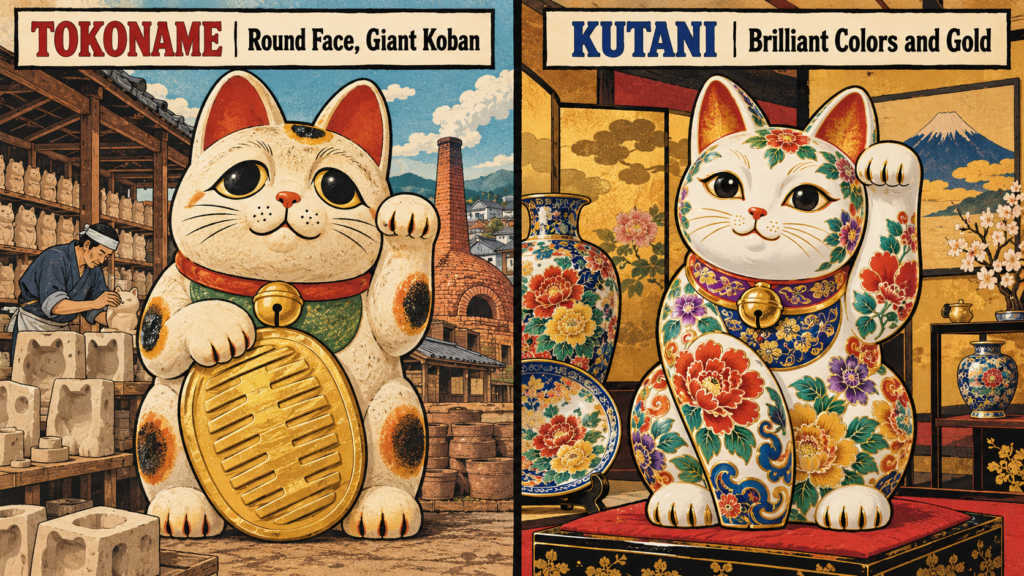
The production of maneki-neko in Tokoname City, Aichi Prefecture, expanded mainly after World War II.
Tokoname was already a major producer of ceramic pipes and other large pottery products. Its craftspeople had developed molding and mass-production techniques that could also be applied to maneki-neko.
Tokoname-style maneki-neko are known for their large ears, round faces, large downward-slanting eyes, sturdy two-head-tall proportions, and prominent oval koban coins.
For many people today, this is the image that immediately comes to mind when they hear the word “maneki-neko.”
During Japan’s period of rapid economic growth, Tokoname maneki-neko spread widely among shops and businesses, becoming familiar symbols of commercial prosperity.
Kutani ware, produced in Ishikawa Prefecture, is renowned for its vivid colors, including red, yellow, green, purple, and deep blue, as well as its powerful painted decoration.
Kutani maneki-neko are often adorned with flowers, arabesque patterns, raised enamel decoration, and gold detailing. Their strong visual presence makes them feel more like decorative works of art than ordinary figurines.
From the Meiji period onward, Kutani ware was also highly valued as an export product.
Kutani maneki-neko therefore have two distinct qualities: they are lucky charms intended to invite good fortune, and they are decorative works of art created to be displayed and admired.
| Region | General Impression | Distinguishing Features |
|---|---|---|
| Imado Ware | Rustic and warm | Clay figurines, simple coloring, Marushime-neko, Edo popular culture |
| Seto Ware | Slender and elegant | Porcelain, realistic proportions, delicate painted decoration |
| Tokoname Ware | Bold and approachable | Round face, large eyes, sturdy proportions, prominent koban coin |
| Kutani Ware | Brilliant and luxurious | Vivid overglaze painting, gold decoration, raised enamel, strong decorative character |
When selecting a maneki-neko, consider not only the good fortune it represents but also where and how it was made.
Choose Imado ware if you are drawn to the stories and popular culture of Edo-period Asakusa. Seto ware is ideal for those who appreciate elegant forms and delicate craftsmanship. Tokoname ware offers the bold, familiar appearance most strongly associated with the modern maneki-neko, while Kutani ware appeals to those seeking brilliant colors and artistic decoration.
The differences between these regions are not a matter of one style being better than another. Each town used its own materials, techniques, and aesthetic traditions to create a distinctive form of good fortune.