The Marushime-neko is an essential part of the history of the maneki-neko. Associated with Imado ware, these Edo-period clay cat figurines have attracted attention as an early form connected to the development of the modern maneki-neko. The Wishes Represented by “Maru” and “Shime” The name Marushime-neko comes from a symbol combining a circle—maru in Japanese—with the character 〆, pronounced shime, meaning to close, fasten, or secure something. The combination evokes…
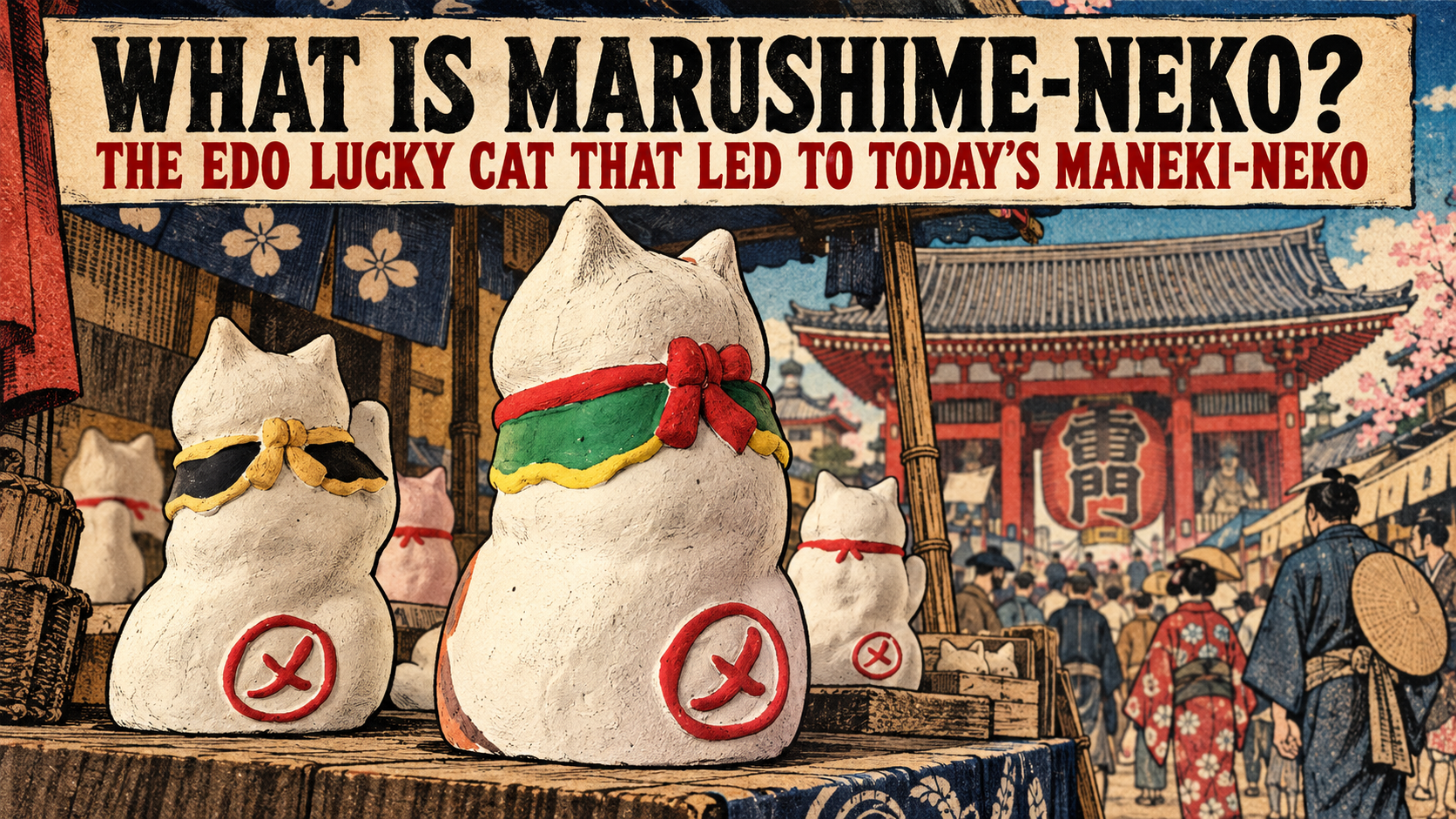
The Marushime-neko is an essential part of the history of the maneki-neko.
Associated with Imado ware, these Edo-period clay cat figurines have attracted attention as an early form connected to the development of the modern maneki-neko.
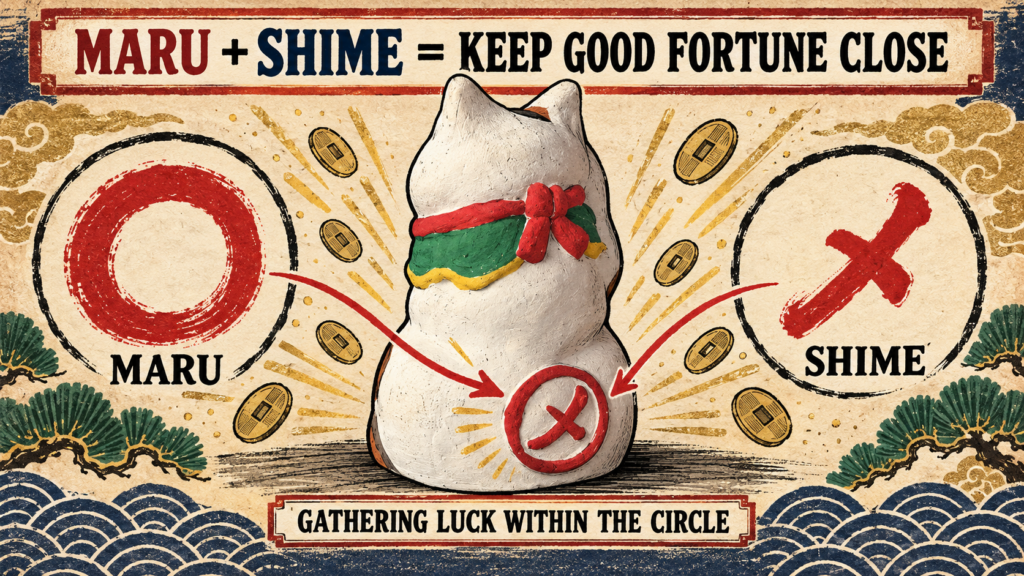
The name Marushime-neko comes from a symbol combining a circle—maru in Japanese—with the character 〆, pronounced shime, meaning to close, fasten, or secure something.
The combination evokes wishes such as “gathering good fortune and money safely within the circle” and “preventing newly arrived luck from escaping.” It is a characteristically Edo-style blend of wordplay, symbolism, and visual design.
Surviving Marushime-neko figurines often have the circular marushime mark painted on their bodies or backs.
One of their defining features is that good fortune is expressed not only through the form of the cat itself, but also through the symbol placed upon it.
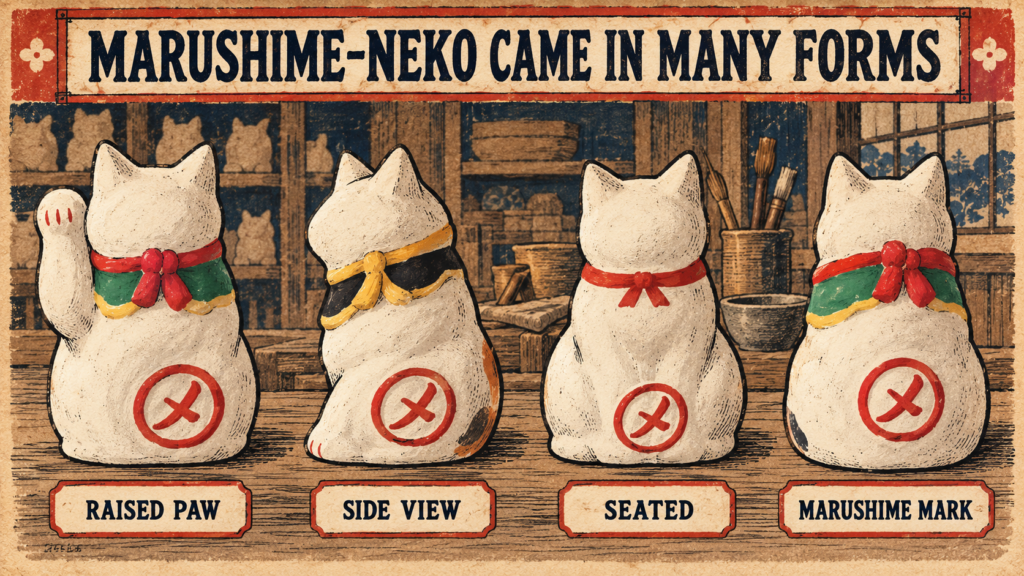
Not every Marushime-neko looks the same.
Some raise a front paw like the familiar maneki-neko of today, while others face sideways or sit in different poses.
This variety suggests that the maneki-neko did not appear fully formed as a single, standardized design.
Instead, Edo craftspeople gradually combined the shape of a cat, auspicious symbols, and a beckoning gesture. Through this process, the figurines slowly evolved toward the form widely recognized today.
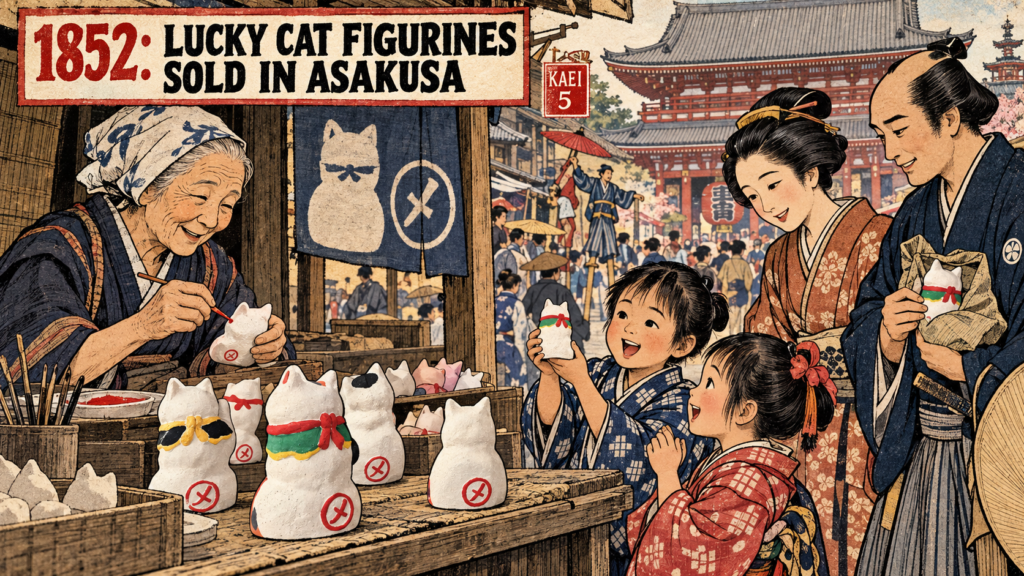
A record from 1852—the fifth year of the Kaei era—describes clay cat figurines being sold around Sensoji Temple and becoming popular.
In the same year, Utagawa Hiroshige created the woodblock print Jorurimachi Hanka no Zu. The print depicts a shop selling cat ornaments believed to be Marushime-neko.
This provides an important clue that lucky cat figurines were not merely legendary objects. They were being produced, sold, and circulated as commercial goods in Asakusa during the final years of the Edo period.
The area surrounding Sensoji Temple was a place of worship, but it was also a major destination for theater, street entertainment, food, and shopping.
Affordable clay figurines likely became popular as Edo souvenirs that visitors and pilgrims could take home with them.
The Marushime-neko emerged from a popular culture where spiritual belief, commerce, tourism, and entertainment came together.
It already possessed the same appeal found in modern character merchandise and art toys: it was charming, decorative, and filled with meaning.
When we look at a modern maneki-neko, behind it are the lives of the many unnamed craftspeople who created these figurines and the people who purchased cats in Asakusa.
To understand the Marushime-neko is to see the maneki-neko not simply as an ornament, but as a living culture that has continued to evolve since the Edo period.
 English
 history