2026.09.12
 history
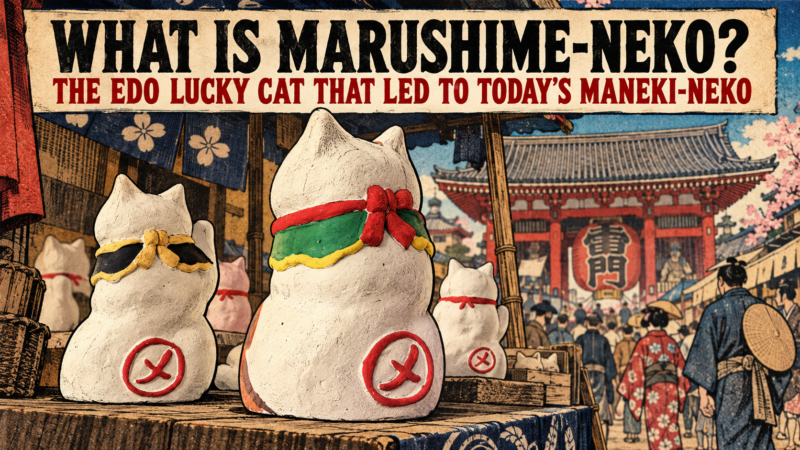
12. What Is Marushime-neko? The Edo-Era Lucky Cat That Led to Today’s Maneki-neko
The Marushime-neko is an essential part of the history of the maneki-neko. Associated with Imado ware, these Edo-period clay cat figurines have attracted attention as an early form connected to the development of the modern maneki-neko. The Wishes Represented by “Maru” and “Shime” The name Marushime-neko comes from a symbol combining a circle—maru in Japanese—with the character 〆, pronounced shime,…
Read more ›
2026.09.12
 English
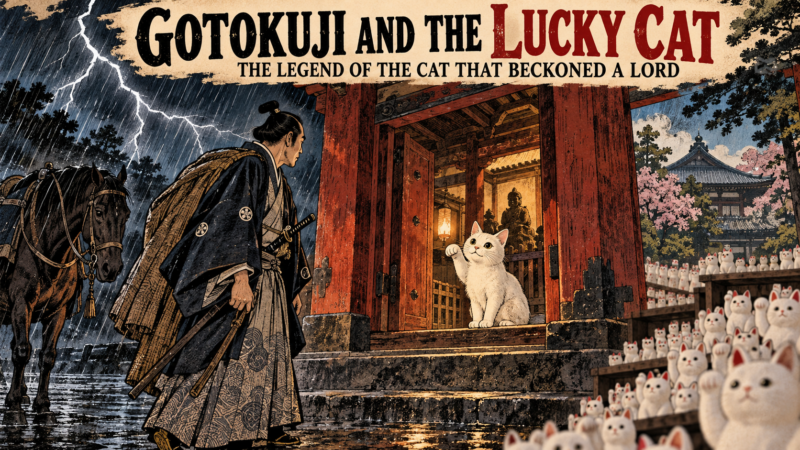
11. Gotokuji Temple and the Maneki-neko|The Legend of the Cat That Beckoned a Feudal Lord
Gotokuji Temple in Setagaya, Tokyo, is known around the world for the remarkable sight of countless white maneki-neko figurines gathered together. The temple attracts visitors from Japan and abroad, but its cats look slightly different from the familiar maneki-neko commonly shown holding a large gold coin. The Cat That Beckoned Ii Naotaka into the Temple According to the legend passed…
Read more ›
2026.09.11
 history
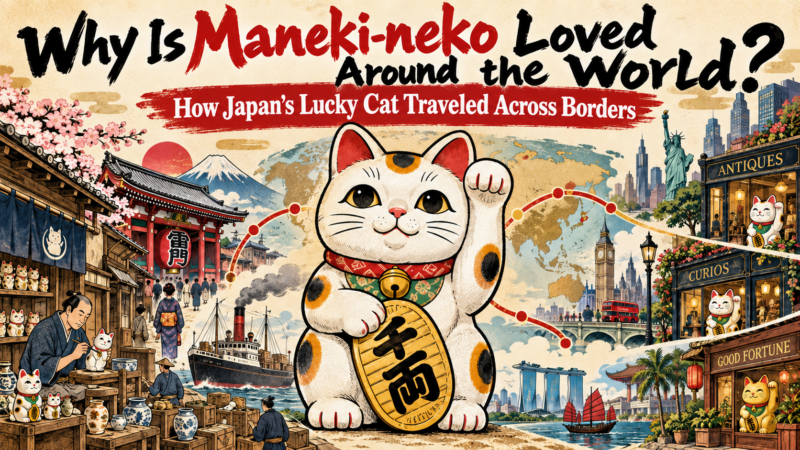
9. Why Is the Maneki-neko Loved Around the World? How the “Lucky Cat” Traveled Beyond Japan
Born at the entrances of Japanese shops, the maneki-neko can now be found in restaurants, stores, hotels, and homes around the world. In English, it is commonly known as the “Maneki-neko,” “Lucky Cat,” or “Fortune Cat.” How did this uniquely Japanese good-luck charm cross national borders and become loved worldwide? Traveling Overseas with Japanese Ceramics During the Meiji period (1868–1912),…
Read more ›